

Pregnancy-related maternal complications (MCs) and adverse pregnancy outcomes (APOs) are among the most pressing public health challenges in low- and middle-income countries, including Ethiopia. Despite their significance, evidence on the burden of APOs and MCs associated with urinary tract infections (UTIs) during pregnancy in Ethiopia remains limited.
This study aimed to determine the magnitude of APOs and MCs among a cohort of pregnant women with UTIs compared to those without UTIs in central Ethiopia. An age-matched prospective cohort study design was employed to follow pregnant women diagnosed with UTIs and their counterparts without UTIs. Participants were monitored throughout pregnancy to assess the occurrence of APOs and MCs. Inferential statistical methods were applied to examine the association between UTIs and the occurrence of APOs and MCs. A significant proportion of women who acquired UTIs developed MCs (n= 54; 30%), which was 1.4 times higher than in women without UTIs, and APOs were observed in 46 women with UTIs (25.6%), also 1.4 times higher than in their counterparts. The most common MC among women with UTIs was postpartum pyrexia (n= 37; 20.6%), which is 1.5 times more frequently than in women without UTIs. The leading APO was preterm birth (n= 39; 21.7%), which was 1.6 times higher compared to their counterparts. Maternal complications most strongly associated with APOs included pregnancy-induced hypertension (n= 3; 60.0%; 1.2 times higher), antepartum hemorrhage (n= 4; 57.1%; 1.2 times higher), and pre-labor rupture of membranes (n= 7; 30.4%; 1.4 times higher). Multivariable logistic regression analysis further revealed that among women with UTIs, being nulli/primiparous (p= 0.02) and attending antenatal care fewer than two times (p= 0.01) were significantly associated with APOs. Additionally, comorbidity with chronic diseases was strongly associated with perinatal deaths (p= 0.01). The higher occurrence of MCs and APOs among women who acquired UTIs during pregnancy highlights the need for targeted interventions. Strategies should focus on addressing key predictive factors such as obstetric history, and comorbid to chronic conditions in order to reduce the burden of MCs and APOs in this population.
Search
About Us
- IJBMR - Aim and Scope
- IJBMR - Open Access
- IJBMR- Journal Details
- Why Publish in IJBMR?
- IJBMR Indexing
- Licenses
- Categories
- IJBMR Performance
- Publication Ethics
- Generative AI Statement
- Revenue Sources
- Advertising Principle
- Direct Marketing Principle
- Archiving Principle
- Privacy Statement
Authors
- Instruction for Author
- Author Registration
- Submission
- Copyright Document
- Copyright and Licensing
- IJBMR - Model Covering Letter
- Publication Charges
- Peer - Review Policy
- Conflict of Interest
- Plagiarism
- Journal Policy - Publication Ethics and Malpractice Statement
Reviewers
Editorial Board
Contact Us
International Journal of Biological and Medical Research (IJBMR)
Original Article
Maternal complications and adverse pregnancy outcomes associated with urinary tract infection in central ethiopia; a multicenter facility-based age matched prospective cohort study
Int J Biol Med Res. 2026; 17(1): 8327-8337
| DOI: 10.65048/ijbmr/2026.17.1.8327.1006
¹Aklilu Lemma Institutes of Pathobiology, Addis Ababa University, Addis Ababa, Ethiopia
²College of Health Sciences, Addis Ababa University, Addis Ababa, Ethiopia
³Department of Obstetrics and Gynecology, Faculty of Medicine in Hradec Kralove, Charles University, Hradec Kralove, Czech Republic
4Faculty of Medicine, Slovak Medical University, Bratislava, Slovak Republic
5Ohio State University Global One Health, Addis Ababa, Ethiopia
²College of Health Sciences, Addis Ababa University, Addis Ababa, Ethiopia
³Department of Obstetrics and Gynecology, Faculty of Medicine in Hradec Kralove, Charles University, Hradec Kralove, Czech Republic
4Faculty of Medicine, Slovak Medical University, Bratislava, Slovak Republic
5Ohio State University Global One Health, Addis Ababa, Ethiopia
Correspondence Address :
Dr. KetemaBizuwork Gebremedhin,
Aklilu Lemma Institutes of Pathobiology,
Addis Ababa University, Addis Ababa, Ethiopia E-mail: Ketema.bizuwork@aau.edu.et
Aklilu Lemma Institutes of Pathobiology,
Addis Ababa University, Addis Ababa, Ethiopia E-mail: Ketema.bizuwork@aau.edu.et
Received: October 16, 2025
Accepted: December 12, 2025
Published: January 3, 2026
Abstract
Keywords
Adverse Pregnancy Outcomes, Maternal Complications, Perinatal Death, Preterm Births, Low Birth Weight, Birth Asphyxia, Ethiopia
DOI
Introduction
Pregnancy and childbirth-related complications remain major public health concerns, threatening the health and survival of both mothers and infants [1]. Although pregnancy is often a source of immense joy for families worldwide, adverse pregnancy outcomes (APOs), such as low birth weight (LBW), preterm birth (PB), and perinatal death (PD) pose significant challenges [1, 2], with PDs devastating effect in low and middle income countries (LMICs)[2]. Globally, more than 96% of the 32 million LBW cases occur in LMICs, substantially contributing to the high burden of PDs in these regions[3, 4]. Newborns who survived from APOs face an elevated risk of post-neonatal mortality, poor health outcomes, stunted growth, neurological impairments, vision and hearing disabilities, and an increased likelihood of developing non-communicable diseases later in life [2].
The frequency of APOs varies markedly across regions. In Asia, the prevalence of PDs is estimated at 39%, while in sub-Saharan Africa (SSA) it is about 38% [5], a wide Country-level disparities: in Argentina, 6.3% of infants are born with LBW, 7.2% are PBs, and 1.6% are PDs; in The Gambia, 12.1% are LBWs and 13.5% are PDs; and in Malawi, 11.6% are LBWs, 8.2% are PBs, and 11.4% are PDs [6]. A systematic review from Ethiopia revealed the pooled prevalence of PDs at 90 per 1,000 live births in hospital settings and 40 per 1,000 live births in community settings [7]. Over the past decade, ten countries have accounted for nearly 75% of all PDs, with the top five being in India (27%), China (10%), Pakistan (7%), Nigeria (6%), and Ethiopia (4%) [7].
The most recent Ethiopian Demographic and Health Survey reported a prevalence of 33 PDs per 1,000 live births [8]. This translates into approximately one in every 35 children dying within the first month of life. Nevertheless, a notable decline in neonatal mortality has been observed since the 2000 fiscal year with two primary contributors to PDs are PBs and LBWs, which disproportionate affects LMICs[9].
Infections during pregnancy can significantly worsen maternal and fetal outcomes. Among these, UTIs the focus of this study represent a substantial yet under-recognized risk factor for pregnancy-related morbidities and APOs in LMICs[10]. Evidence suggests that UTIs during pregnancy are associated with an increased risk of PBs and PDs[10]. For example, a global review conducted across five continents reported that more than 10% of PBs were linked to UTIs during pregnancy, with prevalence rates of up to 35% among affected mothers [11].
Given a study in Ethiopia examined the effect of UTIs on pregnancy outcomes [12], there remains a need for research with larger sample sizes and appropriate comparison groups. Therefore, the present study aimed to determine the prevalence of APOs and MCs, along with their associated factors, among a cohort of pregnant women with UTIs and their counterparts in central Ethiopia.
Materials and Method
Study design, Setting, and Study Participants Recruitment Procedure
Initially, a cross-sectional study design was used to identify pregnant women with UTIs, and then those with culture-confirmed UTIs were prospectively followed using a cohort study design, with cases matched to controls by age, in order to determine APOs and MCs between October 2022 and March 2024. The study was conducted in central Ethiopia, specifically in Addis Ababa and Adama. Addis Ababa, is the capital city of Ethiopia, located at an altitude of 2,400 meters above sea level, while Adama is a town in the East Shoa Zone of Oromia Regional State, situated about 100 kilometers southeast of Addis Ababa[13].
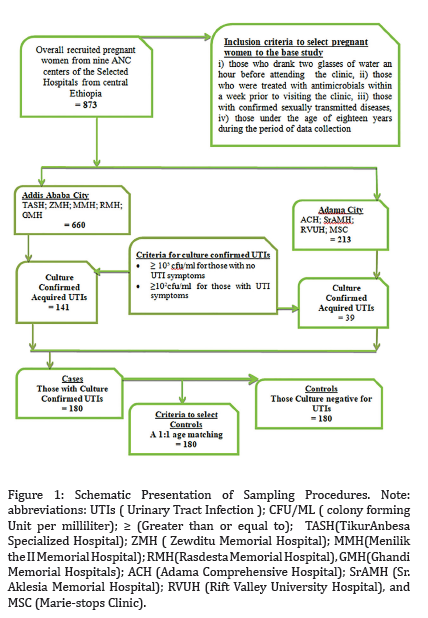
The study participants were pregnant women with UTIs attending nine ANC centers in central Ethiopia. The initial sample size was calculated using a single population proportion formula, independently for the two study cities. A simple random sampling method was applied to recruit participants after proportionally allocating the calculated sample size to the selected health care facilities, based on the number of pregnant women attending the ANC during the study period.Each eligible participant provided a 10-ml midstream clean-catch urine sample in a sterile container, and transported under cold chain conditions to the Microbiology Laboratory of the Aklilu Lemma Institute of Pathobiology. An aliquot of 0.01 ml of thoroughly mixed; serially diluted urine was inoculated onto plate count agar (HiMedia Laboratory Pvt Ltd.) and incubated at 37 °C for 24 hours. Then, the cultures UTIs if colony counts were ≥10? CFU/mL in asymptomatic individuals, and ≥10² CFU/mL in symptomatic individuals [13].
Detailed information on participant recruitment and all investigative procedures can be found in a previously published paper[13], and figure 1 below presents a schematic overview of the process by which pregnant women were included in this study.
Data Collection Instrument and Quality Control
The data collection tool was developed to capture maternal background characteristics, MCs, and APOs among the mother and newborns. A structured, validated, and pretested instrument was used to obtain the required information. The content validity index (CVI) of the study tool was 0.87, indicating an acceptable level of validity. Based on expert recommendations and pretest findings, appropriate modifications were made to clarify ambiguous items. Data collection was carried out by well-trained collectors and supervisors who received two days of training on extracting information from women’s record sheets and conducting interviews.
Data Collection Procedures and Study Variables
Maternal information’s like age, residence, marital status, educational status, occupational status, frequency of vaginal douching per day, history of chronic disease for diabetes mellitus, hypertension, renal calculi, and UTIs before this pregnancy, nutritional status, symptoms for UTIs in the current pregnancy, history of gravidity, parity, and number of antenatal care visits in this pregnancy were gathered by interviews within three days of delivery. Further, the women's charts were reviewed for the maternal clinical and adverse pregnancy outcomes such as hemoglobin, WBC levels, miscarriage, premature labor, preeclampsia, eclampsia, pregnancy induced hypertension, prenatal, intrapartum, and postpartum pyrexia, induction of labor, mode of delivery,early rupture of membrane, antepartum, and postpartum hemorrhage, endometritis, amnionitis, chorioamnionitis, renal failure, septicemia, cystitis, pyelonephritis,APGAR score at first and fifth minutes: which was displayed as Appearance, Pulse Rate, Grimace, Activity, and Respiratoryscores at 1st& 5th minutes of delivery, perinatal death, age of perinatal death, maternal death, weight of newborns at birth, gestational age at birth, hyperbilirubinemia, neonatal convulsion, and encephalopathy.
Table 1: Definitions of Variables
|
Adverse Pregnancy Outcomes |
Presence of at least one of the neonatal complications: neonatal death, preterm birth, low birth weight, asphyxia at first and fifth minutes, and maternal death. |
|
Maternal Complications |
presence of at least one of the maternal related snags like pregnancy induced hypertension, pre-eclampsia, eclampsia, miscarriage, symptomatic UTIs, endometritis, amnionitis, chorioamnionitis, prenatal, intra-partum, and post-partum, premature rupture of membrane, premature labor, pyelonephritis, renal failure, cystitis, septicemia, respiratory syndrome, chronic lung disease, postpartum hemorrhage, antepartum hemorrhage. |
|
Large Volume of Water |
Intake of greater than two glass of water one hour before reaching follow-up center. |
|
Urinary Tract Infections |
Midstream urine specimens from women who have not experienced symptoms but have a bacterial count of at least 105 CFU/ml, and/or bacterial load more than or equal to 102cfu/ml) for women with symptoms of UTIs. |
|
Perinatal Death |
Death of live newborn, regardless of gestational age at birth, within the first 28 completed days of life. |
|
Preterm Birth |
Newborn born before 37 weeks of gestation. |
|
Low Birth Weight |
Newborn born with a weight <2500g. |
|
Parity |
Number of births after 28 weeks of gestation. |
|
Gravidity |
Number of pregnancies regardless of gestational age and outcome |
|
Nutritional Status |
Under Nutrition: BMI < 18.5wt/ht2, Normal: BMI 18.5-24.9wt/ht2, Over Nutrition: BMI 25-29.9wt/ht2), Obese: BMI ≥ 30wh/ht2. |
|
Induction of Labor |
Isuse of medications to contract the uterus during pregnancy before labor begins on its own for a vaginal birth. |
|
Pregnancy Induced Hypertension |
Hypertension in a pregnant woman after 20 weeks' of gestation without the presence of protein in the urine. |
|
Pre-eclampsia |
Hypertension in a pregnant woman after 20 weeks' of gestation with the presence of protein in the urine. |
|
Eclampsia |
Seizures that occur in pregnant people with preeclampsia. |
|
Prenatal, Intra-partum, and Postpartum Pyrexia: |
Pyrexia during antenatal, intra-partum, and postpartum care period respectively. |
|
Postpartum hemorrhage |
Excessive bleeding following the birth of a baby. |
|
Antepartum hemorrhage |
Vaginal bleeding from the genital tract occurring after 28 weeks of gestation and before the delivery of the baby. |
|
Miscarriage |
Loss of a pregnancy before 28 weeks' gestation. |
|
Birth Asphyxia |
Failure to initiate and sustain breathing at birth. |
|
Anemic |
<10gm/dl. |
|
Hyperbilirubinemia |
Elevated level of bilirubin in the blood. |
|
Chorioamnionitis |
Chorioamnionitis is infection tothe amniotic fluid surrounding the fetus. |
|
Endometritis |
Infection to the inner lining of the uterus. |
|
Amnionitis |
infection of the amnion and chorion membranes, and amniotic fluid. |
Ethical Consideration
The Institutional Review Board of the Addis Ababa University College of health Sciences, and Aklilu Lemma Institute of Pathobiology approved this research project. After, the directors of the prenatal clinics and the administrative offices of each of the study hospitals granted permission, the goal of the study was explained to the medical staff members employed in the antenatal clinics. Each of the pregnant women in the study was granted written consent without any pressure to be followed for the pregnancy and postpartum period for MCs and APOs. They were also granted to decline/withdrawfrom the study at any time if they do not want to be involved.
Data Management and Analysis
The collected data was entered into Epi-data version 3.1 and exported to SPSS version 23 for statistical analysis. Multivariate logistic regression analysis was used to determine association of variables with the extent of adverse pregnancy outcomes, and maternal complication with astatistical significance level at P< 0.05.
Results
Maternal Socio-demographic Characteristics
The median age of the women who acquired UTIs and theircounterparts was 28 years (IQR: 25–30 years), with the majority of the women and their counterparts (n = 140; 77.8%) found within the age group 25–34 years of old.The majority of the women who acquired UTIs were urban residents (n= 172, 95.6%), which is 1.02 times higher than their counterparts, married in their marital status (n= 176, 97.8%), which is 1.01 times higher than their counterparts, and unemployed in their occupation (n= 117, 65.0%), which is 1.2 times lower than their counterparts(Table 2).
The majority of the women who acquired UTIswere experiencing vaginal douching for at least twice per day (n= 151, 83.9%), which is lower by 1.0 times than their counterparts,fewer were comorbid to chronic diseases such as hypertension, diabetes mellitus, renal caliculi, and had history of UTIs in their prior life (n= 35, 19.4%), which is lower by 1.3 times than their counterparts, and were symptomatic for UTIs during this study period (n= 25, 13.9%), which is 2.1 times higher than their counterparts (Table 2).
Furthermore, the majority of the women who acquired UTIs were primiparous (n= 85; 47.2%) and multigravida (n= 131; 72.8%), each being 0.90 times lower than their counterparts. In addition, more than half of the women who acquired UTIs (n= 93; 51.7%) had attended antenatal clinic visits two or fewer times during their current pregnancy, which is 1.1 times lower than their counterparts. Further, a significant proportion of women who acquired UTIs (n= 16; 8.9%) underwent induction of labor, which is 1.8 times higher than their counterparts. Furthermore, a significant proportion of women with UTIs (n = 32; 17.8%) were experienced premature labor, which is 1.2 times higher than their counterparts (Table2).
Prevalence of Adverse Pregnancy Outcomes(APOs)
This study revealed, a significant proportion of newborns born to women who acquired UTIswere developed different types of APOs (n= 46; 25.6%), which is 1.4 times higher than their counterpart. This implies over one in five of the newborns among both groups were experiencing one or more APOs such asPDs, PBs, LBWs, and/or birth asphyxia at 1st/5thminutesof birth, with none of the women were died. The most common APO occurred among womenacquired UTIs was PBs (n=39, 21.7%), which is 1.6 times higher, followed by LBWs (n=15, 8.3%), which is 1.4 times higher; birth asphyxia at the 1stminute (n=8, 4.4%), which is 1.3 times higher, birth asphyxia at the 5thminute (n=7, 3.9%), which is 1.4 times higher, and PDs (n=7, 3.9%), which is 3.5 times higher than their counterparts, which implies all the newborns born as PBs, LBWs, asphyxiated at first and fifth minutes, and died during the first 28 days of life were contributed to the prevalence of APOs (Table 2).
Six of the seven PDs among women acquired UTIs and both PDs among their counterparts were occurred within 20 days of delivery. These infants had LBWs, and asphyxiated at both 1st and 5th minutes, and were born to women with multigravida obstetric history. All newborns asphyxiated at 1st minute were remained asphyxiated until the 5th minute, potentially the contributing factor fortheir deaths. All the PDs among women acquired UTIs and one of the two PDs among their counterparts were preterm. Four of the seven PDs among women acquired UTIswere born to women with asymptomatic for UTIs. Three of the seven PDs among women acquired UTIs and one of the two PDs among their counterparts were born from women with comorbid to chronic diseases. Five of the seven PDs among women acquired UTIs and both PDs among their counterparts were born to women who attended antenatal care centers for fewer than two times, and primiparous in their obstetric history, respectively.
Prevalence of Maternal Complications (MCs)
The study revealed, a significant proportion of women acquired UTIs (n=54, 30%), which is 1.4 times higher than their counterparts were developed various types of MCs.The most predominant MC identified among women acquired UTIs was postpartum pyrexia (n= 37, 20.6%), which is 1.5 times higher, followed by pre-eclampsia (n= 33, 18.3%), which is 3.3 times higher; eclampsia (n= 25, 13.9%), which is 1.6 times higher; intrapartum pyrexia (n= 25, 13.9%), which is five times higher than their counterparts (Table 2).
Further, a few women acquired UTIs were also identified with antepartum hemorrhage (n= 07, 3.9%), which is 1.4 times higher, pregnancy-induced hypertension (n= 05, 2.8%), which is 1.3 times higher, postpartum hemorrhage (n= 03, 1.7%), which is three times higher, and miscarriage (n= 03, 1.7%) three times higher than in their counterparts. However, none of the women in either group were developed conditions such as cystitis, pyelonephritis, renal failure, endometritis, amnionitis, chorioamnionitis, septicemia, systemic infection, respiratory syndrome, or chronic lung disease (Table 2).
Association of selected Variables with APOs and MCs
This study used multivariate logistic regression analysis to identify factors associated with adverse pregnancy outcomes (APOs) and maternal complications (MCs). The analysis revealed that none of the factors were statistically associated with APOs and MCs among the control group; however, several factors showed significant associations among women who developed UTIs (Tables 3 and 4).
Specifically, being nulliparous or primiparous [AOR = 3.02, 95% CI: 1.20, 7.60, p= 0.02] was associated with higher odds of APOs, suggesting that having no delivery history or only one previous delivery increased the likelihood of APOs in women with UTIs. Conversely, attending antenatal care fewer than two times during the current pregnancy [AOR= 0.29, 95% CI: 0.12, 0.69, p= 0.01] was negatively associated with APOs (Table 4).
In addition, comorbidity with chronic conditions such as hypertension, diabetes mellitus, renal calculi, and/or a history of UTIs [AOR = 2.57, 95% CI: 1.13, 5.83, p= 0.01] was associated with higher odds of MCs, indicating that having chronic comorbidities increased the likelihood of maternal complications (Table 4).
Table 2: Background characteristics, Frequency Distribution of APOs, and MCs among Cases and Controls, n= 180.
|
Variables |
Cases |
Controls |
Cases |
Controls |
|||||
|
Total tested N= 180 |
Occurrence of APOs (46; 25.6%) |
Total tested N= 180 |
Occurrence of APOs |
Total tested N= 180 |
Occurrence of MCs |
Total tested N= 180 |
Occurrence of MCs |
||
|
(33; 18.3%) |
(54; 30%) |
(40; 22.2%) |
|||||||
|
Age in years |
|
|
|
|
|
|
|
|
|
|
18-24 |
28 |
7(25.0) |
28 |
5(17.9) |
28 |
6(21.4) |
28 |
8(28.6) |
|
|
25-34 |
140 |
37(26.4) |
140 |
27(19.3) |
140 |
44(31.4) |
140 |
29(20.7) |
|
|
35-49 |
12 |
2(16.7) |
12 |
1(8.3) |
12 |
4(33.0) |
12 |
3(25.0) |
|
|
Residence |
|
|
|
|
|
|
|
|
|
|
Urban |
172 |
43(25.0) |
169 |
30(17.8) |
172 |
50(29.1) |
169 |
38(22.5) |
|
|
Rural |
08 |
3(37.5) |
11 |
3(27.3) |
08 |
4(50.0) |
11 |
2(18.2) |
|
|
Marital Status |
|
|
|
|
|
|
|
|
|
|
Married |
176 |
44(25.0) |
175 |
32(18.3) |
176 |
54(30.7) |
175 |
39(22.3) |
|
|
Unmarried |
04 |
2(50.0) |
05 |
1(20.0) |
04 |
0(0.0) |
05 |
1(25.0) |
|
|
Educational Status |
|
|
|
|
|
|
|
||
|
Illiterates |
44 |
13(29.5) |
60 |
13(21.7) |
44 |
15(34.1) |
60 |
17(28.3) |
|
|
Secondary |
87 |
23(26.4) |
65 |
10(15.4) |
87 |
23(26.4) |
65 |
13(20.0) |
|
|
≥ College |
49 |
10(20.4) |
55 |
10(18.2) |
49 |
16(32.7) |
55 |
10(18.2) |
|
|
Occupation Status |
|
|
|
|
|
|
|||
|
Unemployed |
117 |
30(25.6) |
136 |
23(16.9) |
63 |
18(28.6) |
136 |
32(30.2) |
|
|
Employed |
63 |
16(25.4) |
44 |
10(22.7) |
117 |
36(30.8) |
44 |
8(18.2) |
|
|
Frequency of Vaginal Douching |
|
|
|
|
|
|
|||
|
≤ 2 times |
29 |
9(31.0) |
28 |
5(17.9) |
29 |
6(20.7) |
28 |
7(25.0) |
|
|
> 2 times |
151 |
37(24.5) |
152 |
28(18.4) |
151 |
48(31.8) |
152 |
33(21.7) |
|
|
Comorbidity to Chronic Diseases |
|
|
|
|
|
||||
|
Yes |
35 |
9(25.7) |
47 |
8(17.0) |
35 |
17(48.6) |
47 |
12(25.5) |
|
|
No |
145 |
37(25.5) |
133 |
25(18.8) |
145 |
37(25.5) |
133 |
28(21.1) |
|
|
Symptomatic for UTIs |
|
|
|
|
|
|
|||
|
Yes |
25 |
5(20.0) |
12 |
0(0.0) |
25 |
14(56.0) |
12 |
3(25.0) |
|
|
No |
155 |
41(26.5) |
68 |
33(19.6) |
155 |
40(25.8) |
68 |
37(22.0) |
|
|
History of Parity |
|
|
|
|
|
|
|
|
|
|
Nulipara |
21 |
5(23.8) |
17 |
3(17.6) |
21 |
5(23.8) |
17 |
5(29.4) |
|
|
Primpara |
85 |
27(31.8) |
94 |
20(21.3) |
85 |
29(34.1) |
94 |
22(28.1) |
|
|
Multipara |
74 |
14(18.9) |
69 |
10(14.5) |
74 |
20(27.0) |
69 |
13(18.8) |
|
|
History of Gravidity |
|
|
|
|
|
||||
|
Primigravida |
49 |
12(24.5) |
41 |
5(12.2) |
49 |
13(26.5) |
41 |
10(24.4) |
|
|
Multigravida |
131 |
34(26.0) |
139 |
28(20.1) |
131 |
41(31.3) |
139 |
30(21.6) |
|
|
Number of Antenatal Care Visit |
|
|
|
|
|
||||
|
≤ 2 times |
93 |
26(28.0) |
87 |
15(17.2) |
93 |
28(30.1) |
87 |
19(21.8) |
|
|
> 2 times |
87 |
20(23.0) |
93 |
18(19.4) |
87 |
26(29.9) |
93 |
21(22.6) |
|
Table 3: Background Characteristics, and Association of Variables with APOs under Multivariable Logistic Regression Analysis, N= 180.
|
Variables |
Cases (UTI positive) |
Controls (UTI negative) |
|||||
|
|
TTF APO |
APO: 46(25.6%) |
AOR (95%)CI |
TTF APO |
APO: 33(18.3%) |
AOR (95%)CI |
|
|
Age in years |
|||||||
|
18-24 |
28 |
7(25.0) |
2.01(0.25, 16.46) |
28 |
5(17.9) |
2.69(0.21, 34.68) |
|
|
25-34 |
140 |
37(26.4) |
3.27(0.51, 21.18) |
140 |
27(19.3) |
2.83(0.26, 31.03) |
|
|
35-49 |
12 |
2(16.7) |
|
12 |
1(8.3) |
|
|
|
Residence |
|||||||
|
Urban |
172 |
43(25.0) |
0.98(0.16, 6.12) |
169 |
30(17.8) |
0.32(0.56, 1.75) |
|
|
Rural |
8 |
3(27.3) |
|
11 |
3(27.3) |
|
|
|
Marital Status |
|||||||
|
Married |
176 |
44(25.0) |
0.37(0.04, 3.23) |
175 |
32(15.3) |
0.82(0.07, 10.03) |
|
|
Unmarried |
4 |
2(50.0) |
|
5 |
1(20.0) |
|
|
|
Educational Status |
|||||||
|
Illiterates |
44 |
13(29.5) |
3.12(0.84, 11.54) |
60 |
13(21.7) |
2.48(0.72, 8.49) |
|
|
Secondary |
87 |
23(26.4) |
2.29(0.77, 6.83) |
65 |
10(10.4) |
1.40(0.40, 4.91) |
|
|
≥ College |
49 |
10(20.4) |
|
55 |
10(18.2) |
|
|
|
Occupation Status |
|||||||
|
Unemployed |
117 |
30(25.6) |
1.32(0.52, 3.37) |
136 |
23(16.9) |
0.54(0.18, 1.58) |
|
|
Employed |
63 |
16(25.4) |
|
44 |
10(22.7) |
|
|
|
Frequency of Vaginal Douching |
|||||||
|
≤ 2 times |
29 |
9(31.0) |
1.04(0.36, 3.06) |
28 |
5(17.9) |
0.68(0.15, 2.49) |
|
|
> 2 times |
151 |
37(24.5) |
|
152 |
28(18.4) |
|
|
|
Comorbidity to either of hypertension, diabetes mellitus, Renal caliculi, previous history of UTIs |
|||||||
|
Yes |
35 |
9(25.7) |
1.14(0.42, 3.12) |
47 |
8(17.0) |
1.03(0.37, 2.83) |
|
|
History of Parity |
|||||||
|
Nuli/Primpara |
106 |
32(30.2) |
3.02(1.20, 7.60)* |
111 |
23(20.7) |
1.86(0.70, 4.97) |
|
|
Multipara |
74 |
14(18.9) |
|
69 |
10(14.5) |
|
|
|
History of Gravidity |
|||||||
|
Primigravid |
49 |
12(24.5) |
0.80(0.31, 2.05) |
41 |
5(12.2) |
0.31(0.07, 1.41) |
|
|
Multigravid |
131 |
34(26.0) |
|
139 |
28(20.1) |
|
|
|
Number of Antenatal Care Visit |
|||||||
|
≤ 2 times |
93 |
17(18.3) |
0.29(0.12, 0.69)* |
88 |
20(22.7) |
1.79(0.72, 4.47) |
|
|
> 2 times |
87 |
29(33.3) |
|
92 |
13(14.1) |
|
|
|
Pre-eclampsia |
|||||||
|
Yes |
33 |
10(30.3) |
1.35(0.48, 3.79) |
10 |
2(20.0) |
0.56(0.06, 5.77) |
|
|
Eclampsia |
|||||||
|
Yes |
25 |
6(24.0) |
1.02(0.32, 3.24) |
16 |
2(12.5) |
0.52(0.10, 2.85) |
|
|
Post-partum Pyrexia Required antibiotic |
|||||||
|
Yes |
37 |
6(16.2) |
0.52(0.17, 1.56) |
25 |
5(20.0) |
0.83(0.25, 2.78) |
|
|
Body Mass Index wt/ht2 |
|||||||
|
18-24.9 |
25 |
5(20.0) |
1.67(0.11, 24.47) |
35 |
26(74.3) |
1.04(0.07, 15.79) |
|
|
25-29.9 |
150 |
40(26.7) |
3.35(0.28, 39.89) |
141 |
118(83.7) |
0.54(0.04, 8.14) |
|
|
≥ 30 |
5 |
1(25.0) |
1 |
4 |
3(75.0) |
1 |
|
|
Note: Unemployed includes house wife, student, farmer, daily laborers and merchants; Unmarried includes widowed, living together, divorced, and single; (APO; adverse pregnancy outcome); (UTIs; urinary tract infections); (TTF; total tested for) (*; statistically significantly associated at p< 0.05). |
|||||||
Table 4: Background Characteristics, and Association of Variables with MCs under Multivariable Logistic Regression Analysis, N = 180.
|
Variables |
TTF MCs |
MCs (54; 30%) |
AOR (95%)CI |
TTF MCs |
MCs (40; 22.2%) |
AOR (95%)CI |
|
|
Age in years |
|||||||
|
18-24 |
28 |
6(21.4) |
0.69(0.13, 3.60) |
28 |
8(28.6) |
0.70(0.13, 3.81) |
|
|
25-34 |
140 |
44(31.4) |
1.04(0.27, 4.02) |
140 |
29(20.7) |
1.04(0.24, 4.59) |
|
|
35-49 |
12 |
4(33.0) |
|
12 |
3(25.0) |
|
|
|
Residence |
|||||||
|
Urban |
172 |
50(29.1) |
0.33(0.06, 1.87) |
169 |
38(22.5) |
0.67(0.13, 3.58) |
|
|
Rural |
8 |
4(50.0) |
|
11 |
2(18.2) |
|
|
|
Marital Status |
|||||||
|
Married |
176 |
44(25.0) |
0.34(0.05, 2.75) |
175 |
39(22.3) |
0.66(0.06, 6.78) |
|
|
Unmarried |
4 |
2(50.0) |
|
5 |
1(25.0) |
|
|
|
Educational Status |
|||||||
|
Illiterates |
44 |
15(34.1) |
0.99(0.33, 2.95) |
60 |
17(28.3) |
0.40(0.14, 1.09) |
|
|
Secondary |
87 |
23(26.4) |
0.58(0.23, 1.46) |
65 |
13(20.0) |
0.62(0.22, 1.73) |
|
|
≥ College |
49 |
16(32.7) |
|
55 |
10(18.2) |
|
|
|
Occupation |
|||||||
|
Unemployed |
117 |
30(25.6) |
1.1(0.53, 2.27) |
136 |
32(23.5) |
0.83(0.34, 2.01) |
|
|
Employed |
63 |
16(25.4) |
|
44 |
8(18.2) |
|
|
|
Frequency of Vaginal Douching |
|||||||
|
≤ 2 times |
29 |
9(31.0) |
1.35(0.55, 3.28) |
28 |
7(25.0) |
1.02(0.36, 2.84) |
|
|
> 2 times |
151 |
37(24.5) |
|
152 |
33(21.7) |
|
|
|
Comorbidity to Hypertension, Diabetes, Renal Caliculi, History of UTIs before this pregnancy |
|||||||
|
Yes |
35 |
17(48.6) |
2.57(1.13, 5.83)* |
47 |
12(25.5) |
0.72(0.32, 1.64) |
|
|
No |
91 |
37(25.5) |
|
133 |
28(21.1) |
|
|
|
History of Parity |
|||||||
|
Nulipara |
21 |
5(23.8) |
0.70(0.19, 2.66) |
17 |
5(29.4) |
0.50(0.10, 2.52) |
|
|
Primpara |
85 |
29(34.1) |
1.55(0.70, 3.43) |
94 |
22(28.1) |
0.66(0.28, 1.59) |
|
|
Multipara |
74 |
20(27.0) |
|
69 |
13(18.8) |
|
|
|
History of Gravidity |
|||||||
|
Primigravida |
49 |
13(26.5) |
0.65(0.27, 1.59) |
41 |
10(24.4) |
1.01(0.33, 3.11) |
|
|
Multigravida |
131 |
41(31.3) |
|
139 |
30(21.6) |
|
|
|
Number of Antenatal Care Visit |
|||||||
|
≤ 2 times |
93 |
31(33.3) |
1.66(0.80, 3.46) |
88 |
20(22.7) |
1.00(0.47, 2.16) |
|
|
> 2 times |
87 |
23(26.4) |
|
92 |
20(21.7) |
|
|
|
Pre-eclampsia |
|||||||
|
Yes |
33 |
10(30.3) |
0.94(0.34, 2.55) |
10 |
1(11.1) |
0.24(0.08, 0.73) |
|
|
Eclampsia |
|||||||
|
Yes |
25 |
6(24.0) |
1.26(0.53, 3.00) |
16 |
8(50.0) |
2.92(0.34, 25.1) |
|
|
Body Mass Index (wt/ht2) |
|||||||
|
18-24.9 |
25 |
6(24.0) |
0.19(0.02, 1.82) |
35 |
10(28.6) |
0.96(0.08, 11.85) |
|
|
25-29.9 |
150 |
46(30.7) |
0.26(0.03, 2.13) |
141 |
29(20.6) |
1.57(0.13, 19.08) |
|
|
≥ 30 |
5 |
2(40.0) |
1 |
4 |
1(25.0) |
1 |
|
Note: abbreviations: Unemployed includes House Wife, Student, Farmer, Daily Laborers and Merchants; Unmarried includes Widowed, Living Together, Divorced, and Single; (APO; Adverse Pregnancy Outcome); (UTIs; Urinary Tract Infections); (TTF; Total Tested for)(*; statistically significantly Associated at P< 0.05); MCs (Maternal Complications).
Discussion
This study revealed, aprevalence of APOs among women acquired UTIs (25.6%; equated to 2.6 per 10 live births), which is 1.4 times higher than their counterparts is in line with a study findings from Ethiopia, reported a prevalence of (28.3% APOs; equated to 2.8 per 10 live births)[14],higher than a study finding from Saudi Arabia, reported a prevalence of (20.4% APOs; equated to 2.1 per 10 live births)[15], lower than a study from Iran which reported a prevalence of (56.6%; equated to 5.7 per 10 live births)[16].Given the fact that this study is conductedin the most referral health care settings of underdeveloped countries; where most complex cases were to be managed, and the populations studied were UTIs infected,the higher the prevalence of APOs revealed by this study is not dreadful. In fact, the variations in the study's designs, sample sizes, background characteristics and extent of vital health-care services given may contribute to the inter-regional differences of the problems.
Despite the fact that one of the most severe APOs is PDs, which has been drastically reduced in the developed world tolower than (0.001 per 10 live births), remains 100 times higher in developing nations[6], the PDsprevalence revealed by this study (3.9%; equated to 0.4 per 10 live births), which is 3.5 times higher than their counterparts is 1.6 times higher than the global estimate of PDs (2.3%;equated to 0.2 per 10live births)[17]. The higher the PDs found by this study is fairly niggling, due to PD is a worthy indicator of health, and ensures quality health care services and its accessibility by the local communities.
The PBs prevalence among women acquired UTIs revealed by this study (21.7%; equatedto 2.2 per 10 live births), which is 1.6 times higher than their counterparts is 2.2 times higher than the 9.9% PBs; equated to 1.0 per 10 live birth at global in 2020[18]. However, it is 1.2 and 2.2 times higher than the PBs in Southern Asia(13.2%; equated to 1.3 per 10 live birthsin 2020 and Sub-Saharan Africa (10.1%) equated to 1.0 per 10 live births, respectively[18]. This suggests that the PBs level found by the current study substantially poses risks like PDs, or chronic diseases, malnutrition, cerebral palsy, mental retardation, and impairments in growth, vision, and hearing later in life[19].
This study revealed, a significant proportions (30%; equated to 3 per 10) women who acquired UTIs; 1.4 times higher than their counterparts were developed MCs. The most predominant MCs identified was postpartum pyrexia (20.6%; equated to 2.1 per 10 women), which is1.5 times higher than their counterparts, followed by pre-eclampsia (18.3%; equated to 1.8 per 10 women), which is 3.3 times higher; eclampsia (13.9%; equated to 1.4 per 10 women), which is 1.6 times higher; intrapartum pyrexia (13.9%; equated to 1.4 per 10 women), which is five times higher, and premature rupture of membranes (12.8%; equated to 1.3 per 10 women), which is 1.3 times higher than their counterparts.
Intrapartum pyrexia, a temperature higher than 38°Cduring labor, which could be due to the release of high amount of inflammatory cytokines, such as interleukins (IL-1α, IL-1β, IL-6), tumor necrosis factors (TNF-α, TNF-β), and interferons, in response to infectious agents or other factors like drug exposure, dehydration, hyperthyroidism, or excessive ambient heat [20], and/or exposure to prolonged labor, prolonged time of membrane rupture, and nulli-parity[21]The higher the prevalence of postpartum pyrexia (20.6%; equated to 2.1 per 10 women); 1.5 times higher than their counterpartsrevealed by this study is higher than other study findings ranging from (1.3% to 14.6%; equated to 0.1 to 1.5 per 10 women)[21, 22].
Pre-eclampsia and eclampsia are hypertensive disorders of pregnancy accompanying proteinuria, and/or convulsionaffecting up to (10%; equated to 0.1 per 10 pregnancies) worldwide [23], which are often associated with elevated levels of serum triglycerides, cholesterol, and inflammatory markers, such as interleukin-6, interleukin-8, and tumor necrosis factor-alpha (TNFα). These biomarkers are often linked to risk factors for preeclampsia, and eclampsia like hypertensionduring/prior to current pregnancy or existing maternal conditions like chronic kidney disease, autoimmune diseases, diabetes[23]. The higher prevalence of pre-eclampsia (18.3%; equated to 1.8 per 10 women); 3.3 times higher, and eclampsia (13.9%; equated to 1.4 per 10 live births) revealed by this study is in line with a study finding from Ethiopia, reported a prevalence of preeclampsia(14%; equated to 1.4 per 10 women, and eclampsia 18.6%; equated to 1.9 per 10 women)[12], and report of Ethiopian National Emergency Obstetric and Newborn Care (EMONC), revealed that (16%; equated to 1.6 per 10) maternal mortality were due to pre-eclampsia/eclampsia[24].
Furthermore,the current study revealed a positive association between occurrence of APOs and women acquired UTIs andnulli/primiparous in their obstetric history. Even though, debatable and the mechanism is not studied well, the positive link between the women with nulli/primiparous obstetric history, especially those in advanced age are at increased risk for APOs or maternal death[25]. Conversely, attending antenatal care centers for fewer times during pregnancy was foundnegatively associated with the occurrence of APOs among women who acquired UTIs.This finding is in line with study findingsfrom Ethiopiaand Ghana[26].This could be due to the women were healthy enough, which implies immune competent enough to prevent infection.
The higher prevalence of MCsrevealed by this study could be due to women were initially diagnosed with UTIs, which is a risk factors for the occurrence of MCs and APOsand being the study conducted in a developing country, where women are more exposed to risk factors and have access to lower-quality healthcare compared to studies conducted in developed countriesand/or climate change, regional conflicts, and the heightened cost of living in the country Further, some similarity findings within the region could be due to the populationssharing common socio-demographic characteristics, and having similar access to healthcare services.
This study’s strength is a cohort study design we used, which able to examine several outcomes that may be linked to several exposures in one investigation. Therefore, this study grasped the unforeseen exposer of pregnancy to urinary tract infection for APOs, and MCs, which is a good input for policy makers, governments, and stakeholders to revise the health care policies towards mother and child care. The limitation of the study could be confounding factors, even though controlled by randomization of sampling procedure and regression model.
Considering a higher rate of APOs and MCs revealed by this study, and bearing in mind the importance of maternal health and favorable pregnancy outcomes, this study suggests strategies which help to tackle maternal and fetal related complications like addressing disparities in the accessibility, and quality of maternal, newborn care, pledging universal health coverage for maternal, and newborn health, addressing all causes of APOs, and MCs at each visit of antenatal care, and fortifying the health systems to gather high-quality data, so that women’s health and priorities can be identified; and assures accountability in order to improve quality care and equity towards maternal and child health.
Conclusions
In conclusion, improving the quality of perinatal care is essential to reduce adverse pregnancy outcomes (APOs) such as perinatal death (fetal or maternal), preterm birth, low birth weight, and birth asphyxia at the first and/or fifth minute of life, as well as maternal complications including ante- or postpartum hemorrhage, perinatal fever, and preeclampsia or eclampsia. These conditions significantly contribute to both neonatal and maternal mortality.This study found that several factors—such as parity, and be comorbid to chronic conditions like hypertension, diabetes mellitus, renal calculi, and a history of UTIsare associated with an increased risk of adverse pregnancy outcomes and maternal complications.Accordingly, the health care system should implement targeted interventions to address the high prevalence of adverse pregnancy outcomes and maternal complications. In particular, routine screening for UTIs at every antenatal visit is recommended to detect asymptomatic infections early and enable timely management before complications develop.Furthermore, this study highlights the often-overlooked role of UTIs in increasing the risk of adverse pregnancy outcomes and maternal complications when compared with women without UTIs, which could be managed by the recommended interventions by the health care system of the country.
Acknowledgements
We appreciate that Addis Ababa University for supporting this research. We genuinely thank the hospital's personnel accompany the data collectors and supervisor for their incredible involvement in the data collection process of this study.
Funding:
Conflicts of Interest:
The study was supported by Addis Ababa University thematic research unit.
Conflicts of Interest:
The authors declare that they don’t have competing interest.
References
[1].World Health Organization. Managing Complications in Pregnancy and Childbirth. 2017.
[2].Jaleta DD, Abdisa DK. Predictors of adverse perinatal outcome among women who gave birth at Medical Center of Southwest Ethiopia: a retrospective cohort study. BMJ Open. 2022;12:e053881.
[3].Kaforau LSK, Tessema GA, Jancey J, Dhamrait GK, Bugoro H, Pereira GF. Prevalence and risk factors of adverse birth outcomes in the Pacific Island region: A scoping review protocol. BMJ Open. 2021;11:1–6.
[4].Sintayehu Y, Desalew A, Geda B, Shiferaw K, Tiruye G, Mulatu T, et al. Knowledge of Basic Neonatal Resuscitation and Associated Factors Among Midwives and Nurses in Public Health Institutions in Eastern Ethiopia. Int J Gen Med. 2020;13:225–33.
[5].Desalew A, Semahgn A, Tesfaye G. Determinants of birth asphyxia among newborns in Ethiopia: A systematic review and meta-analysis. Int J Health Sci (Qassim). 2020;14:35–47.
[6].Kramer MS. The epidemiology of adverse pregnancy outcomes: An overview. J Nutr. 2003;133 5 SUPPL. 1:1592S-1596S.
[7].Berhan Y, Berhan A. Perinatal mortality trends in Ethiopia. Ethiop J Health Sci. 2014;24 Suppl 0 Suppl:29–40.
[8].Ethiopian Public Health Institute, ICF. Ethiopia Mini Demographic and Health Survey 2019: Final Report. 2021.
[9].Bayih WA, Birhane BM, Belay DM, Ayalew MY, Yitbarek GY, Workie HM, et al. The state of birth asphyxia in Ethiopia: An umbrella review of systematic review and meta-analysis reports, 2020. Heliyon. 2021;7:e08128.
[10].Lee ACC, Mullany LC, Koffi AK, Rafiqullah I, Khanam R, Folger L V, et al. Urinary tract infections in pregnancy in a rural population of Bangladesh: population-based prevalence, risk factors, etiology, and antibiotic resistance. BMC Pregnancy Childbirth. 2019;20:1.
[11].Gilbert NM, O’Brien VP, Hultgren S, Macones G, Lewis WG, Lewis AL. Urinary tract infection as a preventable cause of pregnancy complications: opportunities, challenges, and a global call to action. Glob Adv Heal Med. 2013;2:59-69. https://doi.org/10.7453/gahmj.2013.061.
[12].Gebremedhin KB, Alemayehu H, Medhin G, Amogne W, Eguale T. Maternal Complications and Adverse Pregnancy Outcomes among Pregnant Women who Acquired Asymptomatic Bacteriuria in Addis Ababa, Ethiopia. Biomed Res Int. 2021;2021:5254997.
[13].Gebremedhin KB, Alemayehu H, Medhin G, Amogne W, Slaba K, Belay G, et al. Urinary Tract Infections, Associated Risk Factors and Antibacterial Susceptibility Profile Among Pregnant Women in Central Ethiopia. Infect Microbes Dis. 2025;7.
[14].Tadese M, Dagne K, Wubetu AD, Abeway S, Bekele A, Misganaw Kebede W, et al. Assessment of the adverse pregnancy outcomes and its associated factors among deliveries at Debre Berhan Comprehensive Specialized Hospital, Northeast Ethiopia. PLoS One. 2022;17:e0271287.
[15].Dallak FH, Gosadi IM, Haidar WN, Durayb AA, Alomaish AR, Alshamakhi AH, et al. Prevalence of adverse birth outcomes and associated factors in Jazan, Saudi Arabia: A cross-sectional study. Medicine (Baltimore). 2022;101:e31119.
[16].Dadras O, Nakayama T, Kihara M, Ono-Kihara M, Seyedalinaghi S, Dadras F. The prevalence and associated factors of adverse pregnancy outcomes among Afghan women in Iran; Findings from community-based survey. PLoS One. 2021;16 1 January 2021:1–13.
[17].Ezechi OC DA. Overview of Global Perinatal Mortality. Retrieved from https//www.intechopen.com/chapters/37450 July, 20, 2024. 2012. https://doi.org/10.5772/50039.
[18].Ohuma EO, Moller AB, Bradley E, Chakwera S, Hussain-Alkhateeb L, Lewin A, et al. National, regional, and global estimates of preterm birth in 2020, with trends from 2010: a systematic analysis. Lancet. 2023;402:1261–71.
[19].Blencowe H, Cousens S, Chou D, Oestergaard M, Say L, Moller A-B, et al. Born too soon: the global epidemiology of 15 million preterm births. Reprod Health. 2013;10 Suppl 1 Suppl 1:S2.
[20].Goetzl L. Maternal fever in labor: etiologies, consequences, and clinical management. Am J Obstet Gynecol. 2023;228:S1274–82.
[21].Ashwal E, Salman L, Tzur Y, Aviram A, Ben-Mayor Bashi T, Yogev Y, et al. Intrapartum fever and the risk for perinatal complications–the effect of fever duration and positive cultures. J Matern Neonatal Med. 2018;31:1418–25.
[22].Maayan-metzger A, Mazkereth R, Shani A, Kuint J. Risk factors for maternal intrapartum fever and short-term neonatal outcome. Fetal Pediatr Pathol. 2006;25:169–77.
[23].Fox R, Kitt J, Leeson P, Aye CYL, Lewandowski AJ. Preeclampsia: Risk Factors, Diagnosis, Management, and the Cardiovascular Impact on the Offspring. J Clin Med. 2019;8.
[24].Gaym A, Bailey P, Pearson L, Admasu K, Gebrehiwot Y. Disease burden due to pre-eclampsia/eclampsia and the Ethiopian health system’s response. Int J Gynecol & Obstet. 2011;115:112–6.
[25].Shechter-Maor G, Sadeh-Mestechkin D, Ganor Paz Y, Sukenik Halevy R, Markovitch O, Biron-Shental T. Does parity affect pregnancy outcomes in the elderly gravida? Arch Gynecol Obstet. 2020;301:85–91.
[26].Adu-Bonsaffoh K, Seffah J. Factors associated with adverse obstetric events following induction of labour: a retrospective study in a tertiary hospital in Ghana. Afr Health Sci. 2022;22:348–56.
IJBMR -ISSN: 0976:6685. ©Copyright 2026 This is an open access article under the CC BY-NC-ND license (http://creativecommons.org/licenses/by-nc-nd/4.0/).
Published by BioMedSciDirect Publications
© Copyright 2026 BioMedSciDirect Publications.
This work is licensed under a Creative Commons Attribution-NonCommercial-NoDerivatives 4.0 International License (CC BY-NC-ND)

This work is licensed under a Creative Commons Attribution-NonCommercial-NoDerivatives 4.0 International License (CC BY-NC-ND)