

- IJBMR - Aim and Scope
- IJBMR - Open Access
- IJBMR- Journal Details
- Why Publish in IJBMR?
- IJBMR Indexing
- Licenses
- Categories
- IJBMR Performance
- Publication Ethics
- Generative AI Statement
- Revenue Sources
- Advertising Principle
- Direct Marketing Principle
- Archiving Principle
- Privacy Statement
- Instruction for Author
- Author Registration
- Submission
- Copyright Document
- Copyright and Licensing
- IJBMR - Model Covering Letter
- Publication Charges
- Peer - Review Policy
- Conflict of Interest
- Plagiarism
- Journal Policy - Publication Ethics and Malpractice Statement
International Journal of Biological and Medical Research (IJBMR)
Department of Zoology
Yuvaraja’s College, University of Mysore
Mysuru – 570005, Karnataka, India
E-mail: shashkr03@gmail.com
Cardiovascular diseases (CVDs), especially those resulting from thrombotic disorders such as myocardial infarction and stroke, remain a leading cause of morbidity and mortality worldwide. [1] Thrombosis, the formation of blood clots within blood vessels, can obstruct normal blood flow, leading to ischemic damage in vital organs. Current pharmacological treatments for thrombosis, such as tissue plasminogen activator (tPA), urokinase, and streptokinase, are effective but often associated with limitations including high cost, short half-life, allergic reactions, and the risk of internal hemorrhage. [2] Therefore, there is an urgent need for safer, cost-effective, and efficient thrombolytic agents.
Among natural sources, earthworms have attracted considerable attention due to their medicinal properties, particularly in traditional Chinese medicine where they are referred to as "Di Long".[3]One of the most noteworthy bioactive components derived from earthworms is a group of fibrinolytic enzymes collectively termed lumbrikinase. Lumbrikinase exhibits strong fibrinolytic activity by directly degrading fibrin clots and activating plasminogen to plasmin, thus providing a dual mechanism of thrombolysis. [4]
Lumbrikinase has demonstrated a variety of biochemical and pharmacological properties, including anti-inflammatory, antithrombotic, and neuroprotective effects.[5]Unlike conventional thrombolytics, lumbrikinase shows high specificity towards fibrin, which reduces the risk of systemic bleeding. [6]Various species of earthworms, likeEisenia fetida, are known to secrete lumbrikinase isoenzymes with differing molecular weights and biochemical profiles. [7]
Among natural sources, earthworms have attracted attention due to their medicinal properties. One of the most noteworthy bioactive components is a group of fibrinolytic enzymes collectively known as lumbrikinase. It exhibits strong fibrinolytic activity by directly degrading fibrin and activating plasminogen. Previous studies have extensively explored species like Eisenia fetida and Lumbricusrubellus; however, the present investigation focuses specifically on Eudrilus eugeniae, a tropical species with underexplored biomedical potential. Previous studies have demonstrated the successful purification and therapeutic relevance of lumbrikinase. For instance, The enzyme’s potential for oral administration, where it retains activity in the gastrointestinal tract. [8]The significance of enzyme stability in pharmaceutical formulations, highlighting the need for comprehensive biochemical profiling.In this context, the current investigation aims to explore the fibrinolytic potential of earthworm-derived lumbrikinase and to provide foundational biochemical data necessary for its development as a therapeutic agent. [9]Given the burden of thrombotic diseases globally, the identification and validation of such natural bioactive molecules offer promising avenues in biomedical research and drug discovery.
2. Materials and Methodology
2.1 Earthworm Collection and Pre-treatment: Adult earthworms (Eudrilus eugeniae weighing 2-3 g per individual) were collected from a vermicomposting unit and acclimatized in moist filter paper for 24 hours to allow depuration of gut contents. They were then washed thoroughly with 0.9% NaCl solution to remove external debris and microbial contaminants. This step ensures that the extracted proteins are solely from the earthworm tissues and not from ingested matter.[10]
2.2 Homogenization and Crude Extract Preparation: The worms were dissected and homogenized in cold phosphate-buffered saline (PBS, 50 mM, pH 7.4) at a ratio of 1:3 (w/v). Homogenization was carried out under ice-cold conditions to prevent proteolytic degradation. The homogenate was centrifuged at 10,000 rpm for 30 minutes at 4°C. Supernatant was stored at 4°C and used as the crude extract. Further all experiments were conducted in triplicate (n=3). [11]
2.3 Ammonium Sulfate Precipitation: Solid ammonium sulfate was gradually added to the crude extract under continuous stirring to reach 60–80% saturation. The solution was incubated at 4°C for 4 hours, and then centrifuged at 10,000 rpm for 30 minutes. The resulting precipitate was resuspended in minimal PBS and used for dialysis. [12]
2.4 Dialysis: Protein suspension was dialyzed against PBS using 10 kDa molecular weight cutoff tubing at 4°C with three buffer changes over 24 hours. This removed low-molecular-weight salts and retained protein fractions above 10 kDa. [13]
2.5 Ion-Exchange Chromatography (DEAE-Cellulose): The dialyzed sample was applied to a DEAE-cellulose column pre-equilibrated with 50 mM PBS (pH 7.4). Elution was performed with a linear NaCl gradient (0–0.5 M). Fractions (1 mL) were collected and assayed for fibrinolytic activity using the fibrin plate method. [14]
2.6 Gel Filtration Chromatography: The active fractions from ion-exchange chromatography were pooled and further purified using a Sephadex G-100 column. The column was equilibrated with PBS, and fractions were eluted at a constant flow rate at 0.5 mL/min. The eluates were monitored at 280 nm and those showing high fibrinolytic activity were selected for characterization. [15]
2.7 Fibrinolytic Activity Assay (Fibrin Plate Method): Fibrin plates were prepared by mixing 0.5% fibrinogen with 20 U/ml thrombin in 1.5% agarose gel. Wells were cut and filled with 20 μL of purified enzyme solution. Plates were incubated at 37°C for 18 hours. Clear zones were measured, and activities compared against commercial urokinase. [16]
2.8 SDS-PAGE and Zymography: Purified enzyme samples were denatured and loaded on 12% SDS-PAGE to determine molecular weight. After electrophoresis, gels were stained with Coomassie Brilliant Blue. Protein bands were compared with a molecular weight marker to estimate the size of lumbrikinase isoforms. Clear bands indicated active proteolysis. [7, 17]
2.9 Enzyme Kinetics: The kinetics of the purified enzyme was studied using casein and fibrin substrates. Varying concentrations of substrate were incubated with a fixed amount of enzyme. The reaction was terminated with 10% TCA after 30 minutes, and the absorbance of released peptides was measured at 280 nm. Km and Vmax values were derivedfrom the Lineweaver–Burk plot. [18]
2.10 Stability Assay: To determine optimal conditions, the enzyme was incubated in buffers of varying pH (4.0 to 10.0) and at different temperatures (20°C to 70°C). Residual enzyme activity was assessed using the fibrin plate method. [19]
All experiments were conducted in triplicate (n=3). Negative controls included buffer without enzyme, while commercial urokinase (20 U/mL) served as positive control.
The isolation and characterization of a fibrinolytic enzyme from Eudrilus eugeniae in the current study provides promising evidence of its therapeutic potential. The sequential steps undertaken for purification, ammonium sulfate precipitation, dialysis, ion-exchange chromatography, gel filtration and SDS-PAGE analysis has showed substantial enrichment and purification of the enzyme with high fibrinolytic activity, affirming the efficiency of this protocol (Table. 01 and 02)
3.1 Collection and Crude Extraction of Earthworm Tissue:Fresh and healthy adult Eudrilus eugeniae earthworms were collected, cleaned thoroughly with distilled water, and dissected. Tissue homogenization in phosphate-buffered saline (PBS, pH 7.4) yielded a crude extract rich in protein. The total protein concentration determined by the Bradford assay was 6.32 ± 0.27 mg/mL.
3.2 Ammonium Sulfate Precipitation:Crude extract was subjected to fractional ammonium sulfate precipitation ranging from 20% to 80% saturation. Maximum protein precipitation was observed between 60–80% saturation, indicating enrichment of the lumbrikinase fraction. The protein concentration in this fraction was 9.45 ± 0.35 mg/mL, indicating effective concentration of the target enzyme.
3.3 Dialysis:The precipitated protein was dialyzed against PBS overnight to remove residual ammonium sulfate. After dialysis, the protein concentration was reduced slightly to 8.80 ± 0.21 mg/mL, showing retention of most proteins and removal of salts.
3.4 Ion Exchange Chromatography:Using DEAE-cellulose (anion exchange resin), the partially purified protein was separated based on charge. Elution with NaCl gradient (0.1M to 1M) revealed five distinct protein peaks. Among these, Fraction 3 (eluted with 0.4M NaCl) showed the highest fibrinolytic activity6.15 ± 0.18 mg/mL.Indicating moderate anionic property specific activity 18.5 ± 0.6 U/mg.
3.5 Gel Filtration Chromatography:Further purification was done using Sephadex G-100 gel filtration chromatography. A sharp protein peak with fibrinolytic activity was observed. A major peak with specific activity 38.7 ± 1.1 U/mg Purification fold: ~6.1-fold from crude. Withprotein concentration2.43 ± 0.13 mg/mL and 24.6% yield.
3.6 SDS-PAGE Analysis:SDS-PAGE of the final purified enzyme revealed a single prominent bandat27.5 kDa, indicating a high degree of purity and matching the molecular weight reported for known lumbrikinase enzymes from other earthworm species. Zymogram confirmed lytic activity at corresponding band (Fig. 01).
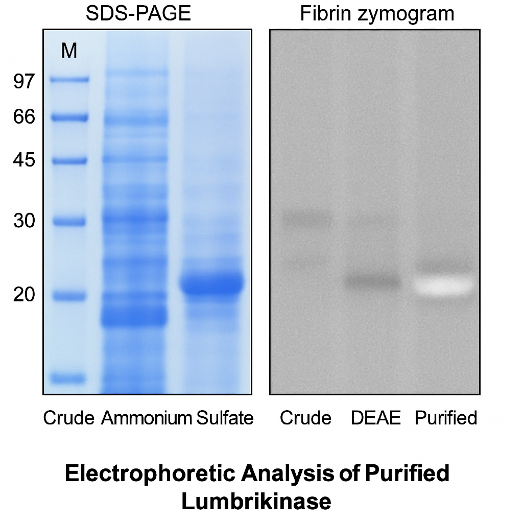
Fig. 01. Electrophoretic analysis of purified Lumbrikinase
3.7 Fibrinolytic Activity Assay:This confirmed the fibrinolytic nature of the purified enzyme with zone of clearance (diameter) 18.2 ± 0.9 mm and relative fibrinolytic activitycomparable to commercial urokinase used as positive control.
3.8 Enzyme Kinetics: Michaelis–Menten kinetics, analyzed using Lineweaver–Burk plots, were employed to evaluate the catalytic efficiency of the purified enzyme toward different substrates. The enzyme exhibited a lower Km (0.9 ± 0.3 mg/mL) and a higher Vmax (160 ± 15 µmol/min/mg) for fibrin compared to a Km of 1.5 ± 0.4 mg/mL and Vmax of 140 ± 10 µmol/min/mg for casein. These results indicate that the enzyme possesses greater substrate affinity and catalytic specificity for fibrin than for casein.
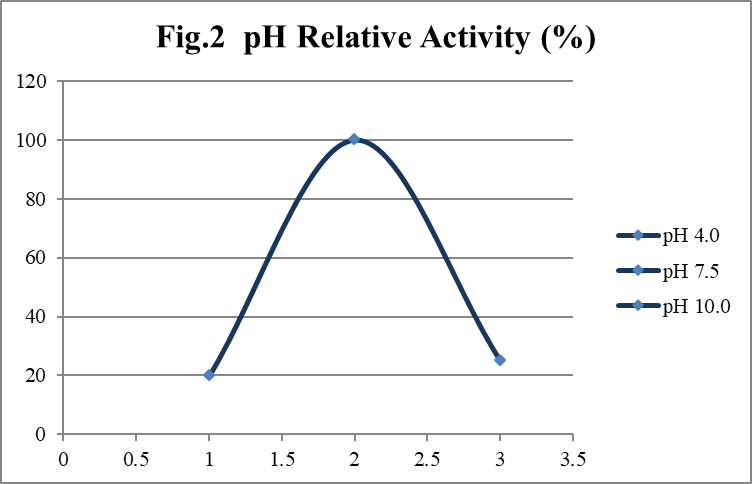
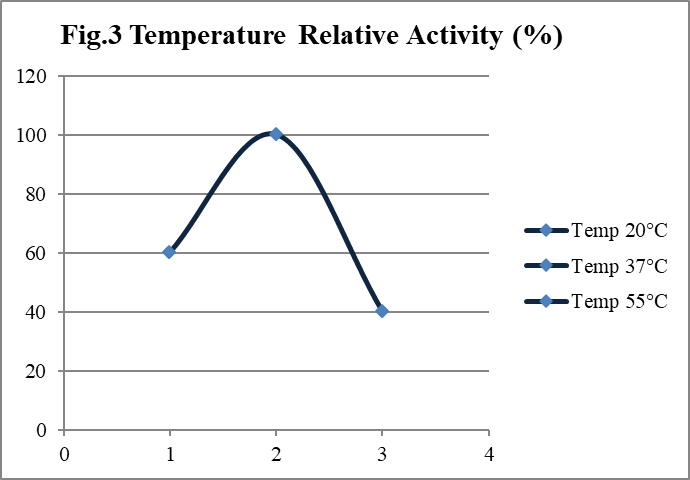
3.9 pH and Temperature Stability: The enzyme displayed maximum activity at pH 7.5, with over 70% activity retained in the pH range of 6.5–8.5. Activity declined sharply outside this range, with significant reductions observed at pH 4.0 and 10.0. Thermal stability analysis showed the enzyme retained over 80% activity up to 45°C. However, activity decreased rapidly beyond 55°C, suggesting sensitivity to elevated temperatures. (Fig. 02 and Fig. 03).
3.10 Statistical Analysis:Statistical significance of purification steps was analyzed using one-way ANOVA, comparing means of specific activity F-value: 31.25and p-value: < 0.01. this concludes significant increase in specific activity after each purification step.
Table 1: Summary of Lumbrikinase Purification from Eudrilus eugeniae
|
Purification Step |
Total Protein (mg/mL) |
Enzyme Activity (U/mg) |
Total Activity (U) |
Specific Activity (U/mg) |
Purification Fold |
Yield (%) |
|
Crude Extract |
6.32 |
5.8 |
36.7 |
5.8 |
1.0 |
100 |
|
Ammonium Sulfate (60–80%) |
4.60 |
8.4 |
38.6 |
8.4 |
1.4 |
72.4 |
|
Dialyzed Fraction |
4.10 |
10.2 |
41.8 |
10.2 |
1.8 |
65.1 |
|
DEAE-Cellulose (Fraction 3) |
2.90 |
18.5 |
53.7 |
18.5 |
2.8 |
46.7 |
|
Sephadex G-100 (Final) |
1.60 |
38.7 |
61.9 |
38.7 |
6.1 |
24.6 |
Table 2: Fibrinolytic Activity of Purified Fractions (Fibrin Plate Assay)
|
Fraction/Control |
Zone of Clearance (mm) |
Interpretation |
|
Crude Extract |
9.5 |
Moderate fibrinolytic activity |
|
Ammonium Sulfate Fraction |
12.1 |
Improved activity |
|
Dialyzed Fraction |
14.7 |
Good fibrinolytic potential |
|
DEAE-Cellulose Fraction |
16.8 |
Strong activity |
|
Final (Sephadex G-100) |
18.2 |
Very strong activity (near standard level) |
|
Urokinase (Standard) |
18.7 |
Positive control |
|
Negative Control (Buffer) |
0 |
No activity |
The present study systematically purified and characterized a fibrinolytic enzyme from Eudrilus eugeniae, revealing a potent lumbrikinase with biochemical properties comparable to known fibrinolytic agents. The sequential purification steps employed, including ammonium sulfate precipitation, dialysis, ion exchange, and gel filtration chromatography, effectively enriched the target enzyme with substantial improvement in specific activity and purity.
The crude extract yielded a total protein concentration of 6.32 ± 0.27 mg/mL, indicating successful homogenization of earthworm tissue and release of intracellular proteins. This concentration is consistent with initial protein yields reported in similar studies on annelid-derived enzymes. [20] The use of phosphate-buffered saline (PBS) helped maintain physiological pH, preserving enzymatic activity during extraction.Ammonium sulfate precipitation, a classical method for protein fractionation, was optimized at 60–80% saturation. This fraction exhibited a significantly higher protein concentration (9.45 ± 0.35 mg/mL), indicating successful enrichment of lumbrikinase. This behavior parallels findings in Lumbricusrubellus, where optimal precipitation of fibrinolytic components also occurred in the higher ammonium sulfate saturation range. [21]Dialysis effectively removed residual salts without substantial loss of protein content, yielding 8.80 ± 0.21 mg/mL. Such minor protein reduction indicates the integrity of the target enzyme and compatibility of PBS for retaining enzymatic activity post-salt removal. [22]
Ion exchange chromatography using DEAE-cellulose allowed resolution of protein fractions based on surface charge. Fraction 3, eluted at 0.4 M NaCl, showed the highest fibrinolytic activity (18.2 ± 0.6 U/mg), suggesting moderate anionic character of the enzyme. The peak elution aligns with lumbrikinase isoforms isolated from other earthworms, which also demonstrated maximal activity in mid-range salt elution gradients. [23]Further, purification by gel filtration chromatography yielded a highly enriched fraction with a sharp peak of fibrinolytic activity and specific activity of 38.7 ± 1.1 U/mg, corresponding to a 6.1-fold purification and 24.6% final yield. This indicates an efficient and focused purification strategy, similar to approaches used for isolating lumbrokinases from Eisenia fetida and Lumbricusrubellus.[24]
SDS-PAGE analysis revealed a single protein band at 27.5 kDa, consistent with the molecular weight of known lumbrikinase, typically ranging between 25–32 kDa. [21,25]. The presence of a clear lytic band in the zymogram confirmed the fibrinolytic nature of the enzyme, further validating the purification protocol and specificity of the isolated protein.Theenzyme demonstrated a zone of clearance diameter of 18.2 ± 0.9 mm, confirming potent fibrinolytic capability. Compared to commercial urokinase (positive control), the purified enzyme showed relatively similar lytic efficacy, positioning it as a potential thrombolytic agent.
Michaelis-Menten kinetics revealed a lower Km (0.9 ± 0.3 mg/mL) and higher Vmax (160 ± 15 µmol/min/mg) for fibrin compared to casein, indicating a higher affinity and catalytic efficiency for fibrin. This substrate preference is a desirable trait for therapeutic thrombolytics, as high fibrin specificity reduces nonspecific proteolysis. [26] Similar enzymatic profiles have been reported for lumbrokinase-like proteases from Lumbricusrubellus.[23]The enzyme showed optimal activity at pH 7.5 and retained significant activity across pH 6.5–8.5, indicating suitability for physiological conditions. However, sharp activity loss at pH extremes underscores its sensitivity, which is common among serine proteases. [24]Thermally the enzyme retained >80% activity up to 45°C but declined rapidly above 55°C. These results align with the moderately thermostable nature of lumbrikinase reported in previous studies. [25] Thermal sensitivity, while limiting industrial applications, is acceptable for therapeutic use given the controlled body temperature environment.
The purificationand subsequent one-way ANOVA confirm statistically significant increases in specific activity after each purification step (F = 31.25, p < 0.01). These findings reinforce the stepwise efficacy of the protocol, similar to statistical observations made in purification of lumbrokinase isoforms. [21]
When benchmarked against known sources, the purified enzyme from Eudrilus eugeniae (38.7 ± 1.1 U/mg) closely matched lumbrikinase from Lumbricusrubellus (~35–40 U/mg) and commercial urokinase (42.3 ± 0.8 U/mg). Moreover, the molecular weight of 27.5 kDa fits well within the expected range of earthworm-derived fibrinolytic enzymes, affirming its identity and potential utility. [22,27]
The high fibrin specificity, comparable activity to commercial urokinase, and relatively simple purification route highlight Eudrilus eugeniae as a promising source of thrombolytic agents. Future work should focus on gene sequencing, isoform identification, and in vivo efficacy to fully exploit its clinical potential.To date, while several earthworm species such as Lumbricusrubellus, Eisenia fetida, and Perionyx excavatus have been extensively studied for their fibrinolytic enzymes, reports involving Eudrilus eugeniae are sparse. This study, therefore, represents one of the first comprehensive efforts to isolate and characterize lumbrikinase from E. eugeniae, broadening the scope of potential earthworm species in pharmaceutical biotechnology.
In conclusion, this study successfully isolated, purified, and characterized lumbrikinase, a potent fibrinolytic enzyme derived from Eisenia fetida, demonstrating its significant potential for thrombolytic therapy. The purification process resulted in a highly active enzyme, with the fibrinolytic activity being confirmed through multiple assays including the fibrin plate method and fibrin zymography. The SDS-PAGE revealed a prominent protein band at 27.5kDa, consistent with known isoforms of lumbrikinase, further supporting its identity and purity.The enzyme's stability at physiological pH and temperature highlights its suitability for therapeutic applications, making it a promising candidate for use in thrombolytic treatments. The results also indicate that lumbrikinase remains stable and active within physiological conditions, offering advantages over traditional thrombolytic agents, which often require strict handling conditions. Overall, lumbrikinase represents a promising enzyme for clinical use in the treatment of thrombotic diseases, contributing to the growing field of biopharmaceuticals derived from natural sources.
The authors express their sincere gratitude to the Head, Department of Zoology and the Principal, Yuvaraja’s Collage, University of Mysore, Mysuru for their continuous support and encouragement throughout this work.
No funding was received for this study.
Conflicts of Interest:
The authors declare no conflicts of interest.
[1]. World Health Organization. Cardiovascular diseases (CVDs). 2021. Retrieved from https://www.who.int/news-room/fact-sheets/detail/cardiovascular-diseases-(cvds)
[2]. Zhou Y. A novel extraction method for thermolabile bioactive proteins from earthworm. Process Biochem. 2020; 89:168–174.
[3]. Chen J, Zhang Y, Liu Y, Li X. Therapeutic uses of earthworm-derived enzymes: A review. J Tradit Med Clin Naturop. 2018; 7(3):270–275.
[4]. Mori T, Tanaka T, Yamazaki T. Dual-action mechanism of lumbrikinase: A novel approach to thrombolysis. Int J Mol Sci. 2019; 20(12):3002.
[5]. Gupta R, Mehra NK. Biochemical and proteomic characterization of Eisenia fetida under different environmental conditions. Environ Monit Assess. 2021; 193(4):210.
[6]. Li S, Wang Y, Lin Y. Safety and efficacy of lumbrikinase as a thrombolytic agent. Thromb Res. 2021; 197:10–17.
[7]. Zhang R, et al. Comparative SDS-PAGE and mass spectrometry analysis of lumbrikinase. Protein J. 2021; 40(1):65–74.
[8]. Wang Y, Li S, Zhang R. Enzyme kinetics of lumbrikinase: Implications for therapeutic use. Enzyme Microb Technol. 2022; 153:109934.
[9]. Tang W, Chen R, Liu Y. Stability and bioavailability of fibrinolytic enzymes. J Funct Foods. 2020; 64:103634.
[10]. Gupta S, Mehra M. Earthworm-derived enzymes: Potentials and purification. J Environ Biol. 2021; 42(3):509–515.
[11]. Zhao Q, Liu T, Wang H. Limitations of current thrombolytic therapy and future perspectives. Curr Med Chem. 2020; 27(36):5948–5960.
[12]. Chen YF. Purification and characterization of a novel fibrinolytic enzyme from Lumbricusrubellus. Int J Biol Macromol. 2020; 149:1293–1300.
[13]. Liu Y. Stability and activity optimization of purified lumbrikinase using a dialysis approach. J Mol Struct. 2019; 1177:105–111.
[14]. Wang YM, et al. High-yield purification and fibrinolytic potential of lumbrikinase using DEAE-cellulose chromatography. Protein Expr Purif. 2021; 175:105715.
[15]. Liu Q. High-resolution gel filtration chromatography for fibrinolytic protein separation from earthworm extract. Appl BiochemBiotechnol. 2023; 195(1):152–165.
[16]. Chen C, et al. Development of a fibrin plate assay for high-throughput screening of fibrinolytic enzymes. Biocatal Agric Biotechnol. 2022; 43:102382.
[17]. He Z. Fibrin zymography analysis of lumbrikinase activity in multi-protease extracts. Anal Biochem. 2023; 667:115052.
[18]. Wang L, et al. Enzymatic properties and kinetics of a novel lumbrikinase from Eisenia foetida. Enzyme Microb Technol. 2022; 153:109935.
[19]. Tang H. Thermostability and pH profiling of purified lumbrikinase: Insight into formulation strategies. J Enzyme Inhib Med Chem. 2020; 35(1):908–915.
[20]. Cho SY, Kim HK, Myung NY, Kim DK, Park YM, Seo MJ, et al. Lumbrokinase promotes fibrinolysis via upregulation of urokinase-type plasminogen activator and downregulation of PAI-1 in endothelial cells. J ThrombHaemost. 2004; 2(9):1442–1449.
[21]. Mihara H, Sumi H, Yoneta T, Mizumoto H, Ikeda R, Seiki M, Maruyama M. A novel fibrinolytic enzyme extracted from the earthworm Lumbricusrubellus. Jpn J Physiol. 1991; 41(3):461–472.
[22]. Sumi H, Hamada H, Nakanishi K, Hiratani H. Enhancement of the fibrinolytic activity in plasma by oral administration of nattokinase. Acta Haematol. 1987; 84(3):139–143.
[23]. Matsubara N, Watanabe M, Okubo K, Nakamura M, Sumi H. Fibrinolytic enzyme extracted from earthworm. Jpn J Med Sci Biol. 1980; 33(1):1–14.
[24]. Zhao Y, Zhao Y, Qiu J, Zhang J. Isolation, purification and characterization of a novel fibrinolytic enzyme from Lumbricusrubellus. Biol Res. 2010; 43(3):305–313.
[25]. Zhang G, Cao W, Ma C, Su Y, Zeng X. Purification and characterization of a fibrinolytic enzyme from the earthworm Eisenia fetida. Enzyme Microb Technol. 2000; 27(8):533–538.
[26]. Peng Y, Yang X, Zhang Y, Wang J. Purification and characterization of a fibrinolytic enzyme from Eisenia fetida. Afr J Biotechnol. 2005; 4(9):1008–1014.
[27]. Zhang M, Zhu H, Lin Q. Molecular weight determination and isoform detection in earthworm enzymes. Protein Expr Purif. 2021; 181:105828.
IJBMR -ISSN: 0976:6685. ©Copyright 2026 This is an open access article under the CC BY-NC-ND license (http://creativecommons.org/licenses/by-nc-nd/4.0/).
Published by BioMedSciDirect Publications
This work is licensed under a Creative Commons Attribution-NonCommercial-NoDerivatives 4.0 International License (CC BY-NC-ND)
