

The constitution of Kenya 2010 envisages basic education as a right for every child to enable attainment of vision 2030 and SDG 4 for effective economic participation and growth. However, low retention rates of school-girl mothers in public primary schools remain an issue in Busia County, Kenya. More still, the region has witnessed disproportionately high adolescent birth rates lowering learning outcomes. To address this, re-entry policy program was instituted in 1999 to improve schoolgirl retention rates for enhanced participation in national building. While re-entry policies exist, effectiveness may be compromised by implementation gaps arising from weak stakeholder engagement, unstructured assessment and inappropriate feedback mechanisms. The study is premised on Tinto’s Learner Retention Theory, which emphasizes stakeholder participatory evaluation process as link for institutional integration, social integration, and student commitment, towards implementing re-entry policy. The objective was to establish the influence of participatory evaluation on retention of school girl mothers. The study used descriptive cross-sectional design capturing quantitative data. The population consisted of 328 re-entered schoolgirl mothers and 221 re-entry teachers. The sample consisted of 100 schoolgirl mothers and 66 teachers using multistage cluster sampling procedure. Quantitative data was collected using learner and teacher questionnaire and analysed using descriptive statistics and linear regression model approaches. The findings revealed significant relationship between participatory evaluation and the retention of schoolgirl mothers (?=0.45, p<.01). Results confirmed that engaging stakeholders in collective needs assessment, decision-making, and feedback mechanisms significantly retention of schoolgirl mothers in primary school system. Recommendations: (1) Institutionalization of participatory monitoring and evaluation framework of re-entry policy by Ministry of Education, County Government of Busia and civil society organizations. (2) Creating an enabling environment for effective implementation of re-entry policy.
Search
About Us
- IJBMR - Aim and Scope
- IJBMR - Open Access
- IJBMR- Journal Details
- Why Publish in IJBMR?
- IJBMR Indexing
- Licenses
- Categories
- IJBMR Performance
- Publication Ethics
- Generative AI Statement
- Revenue Sources
- Advertising Principle
- Direct Marketing Principle
- Archiving Principle
- Privacy Statement
Authors
- Instruction for Author
- Author Registration
- Submission
- Copyright Document
- Copyright and Licensing
- IJBMR - Model Covering Letter
- Publication Charges
- Peer - Review Policy
- Conflict of Interest
- Plagiarism
- Journal Policy - Publication Ethics and Malpractice Statement
Reviewers
Editorial Board
Contact Us
International Journal of Biological and Medical Research (IJBMR)
Original Article
Evaluation of re-entry policy on retention of schoolgirl mothers in primary schools in busia county: addressing engagement, assessment and feedback
Int J Biol Med Res. 2026; 17(1): 8314-8321
| DOI: 10.65048/ijbmr/2026.17.1.8314.1004
University of Nairobi, Nairobi, Kenya
Correspondence Address :
Dr Akello Pamela Awino,
University of Nairobi, Nairobi, Kenya E-mail: pamakello@gmail.com
University of Nairobi, Nairobi, Kenya E-mail: pamakello@gmail.com
Received: October 3, 2025
Accepted: November 17, 2025
Published: January 3, 2026
Abstract
Keywords
Participatory, Evaluation, Re-entry Policy, Retention, School-Girl Mothers
DOI
Introduction
The discourse on retaining school-girl mothers in the education system is a global concern, addressed primarily through re-entry policies. Research on the effectiveness of these policies, however, presents a complex and often conflicting picture. While some studies, like those from Imbosa, Majanga, & Ouda (2022) in Vihiga, Kenya, and Muli et al. (2023), suggest that reentry policies have a positive impact on retention, others point to significant implementation challenges. Muyunda’s (2021) qualitative case study in Lusaka, Zambia, found that despite the policy’s existence, a lack of clear goals, limited stakeholder awareness, and insufficient resources made its implementation ineffective. This inconsistency in findings—ranging from positive impacts to logistical failures—highlights a critical research gap: the factors that determine whether these policies succeed or fail in different contexts.
This study aims to fill this gap by exploring how a participatory evaluation approach can enhance the practical implementation and long-term sustainability of re-entry policies. By moving beyond simple policy analysis, this research will use a mixed-methods approach to understand the nuanced realities on the ground. It will focus specifically on Busia County’s primary schools, a region with an exceptionally high adolescent pregnancy rate. The study will not only assess the policy’s impact but also examine how stakeholder collaboration, collective needs assessment, and inclusive feedback loops can create context-specific solutions, thereby improving the retention of school-girl mothers and addressing the systemic barriers that previous research has identified.
1.1.1 Participatory Evaluation of Re-Entry Policy Programme
The success of a re-entry policy program is heavily influenced by how it’s implemented. Traditional, top-down approaches have often led to conflicting results regarding the retention of school-girl mothers, as they may fail to address the unique, on-the-ground challenges these students face (Muyunda, 2021). The independent variable of this study is the participatory evaluation of a re-entry policy programme.
This method argues that involving stakeholders, particularly the school-girl mothers themselves, in the assessment and improvement of the program is essential for its success (Cornish et al., 2023). By empowering these individuals to actively participate in the process, participatory evaluation offers a potential solution to the conflicting outcomes found in previous studies, which often failed to consider local contexts and the lived realities of the beneficiaries (Imbosa et al., 2022).
This research is grounded in Tinto’s Learner Retention Theory (Tinto, 1975, 1993). The theory posits that learner retention is not merely a function of academic ability but is significantly influenced by a student’s academic and social integration into the educational environment. The re-entry policy serves as the legislative mechanism that allows school-girl mothers to return to school (Christine, 2020), while participatory evaluation is the tool that facilitates the crucial integration process.
By fostering a sense of ownership and belonging through stakeholder engagement and inclusive feedback channels (Edstrom, Gardelli & Backman, 2024), participatory evaluation enhances the academic and social integration of school-girl mothers, thereby strengthening their sense of purpose and increasing their likelihood of staying in school.
The issue of retaining school-girl mothers in the education system is a critical challenge across Sub-Saharan Africa (SSA), where high adolescent birth rates (ABR) frequently derail educational attainment and hinder the region’s ability to meet the UN Sustainable Development Goals (SDGs), particularly SDG 4 on quality education and SDG 5 on gender equality. In many SSA countries, despite the presence of re-entry policies (Muli et al., 2023; Imbosa et al., 2022), the actual retention rates of these girls in primary schools remain low.
This disconnect between policy and outcome is often attributed to systemic barriers such as widespread poverty, cultural stigma, and inadequate support systems, which prevent girls from fully reintegrating into the school environment (Baafi, 2020). The region’s struggle to effectively retain these students highlights a critical problem that undermines both individual empowerment and national development.
This challenge is particularly p ronounced in Kenya, where the national ABR of 56.3 per 1,000 girls remains a significant concern (Kenya Demographic and Health Survey, KDHS 2022). While re-entry policies exist (Christine, 2020), their implementation has been inconsistent, affected by shortcomings in stakeholder participation, inefficient administrative alignment, and a lack of robust support systems (Edstrom, Gardelli & Backman, 2024).
These national-level issues are amplified in specific regions. Busia County, for example, stands out with an exceptionally high ABR of 73 per 1,000 girls, far exceeding the national average (Kenya Demographic and Health Survey, KDHS 2022). This disparity highlights Busia as a highburden county where socio-economic and cultural factors uniquely compound the problem. The study thus seeks to address this critical issue by answering the question: how does participatory evaluation of re-entry policy influence the retention of school-girl mothers in public primary schools in Busia County?
Participatory evaluation of a re-entry policy programme is a collaborative assessment process that involves all key stakeholders—including school-girl mothers, educators, policymakers, and community members—in assessing and improving the policy’s effectiveness. This approach is rooted in participatory action research, which emphasizes integrating experiential knowledge to address educational inequities (Cornish et al., 2023). It relies on collaborative decision-making and evidence to create adaptive, inclusive evaluation frameworks (Addey & Sellar, 2020), ensuring that the voices of vulnerable groups, such as school-girl mothers,
directly inform policy adjustments (Chiyota, 2020; Christine, 2020). For this study, participatory evaluation will be measured using four key indicators adopted from established frameworks (Edstrom, Gardelli & Bachman, 2024; WHO, 2022; Marende, 2022): stakeholder engagement, participatory decision-making, collective needs assessment, and inclusive feedback channels.
Retention of learners within public primary school institutions refers to the process of ensuring that students remain enrolled from admission through to completion or transition (Dalangin, 2018; Alsharari & Alshurideh, 2020). For this study, retention of school-girl mothers is defined as their ability to stay enrolled and engaged in the primary school system post-childbirth.
The concept is operationalized through four dimensions of integration and engagement with the school community (Adomako Barfi Haruna et al., 2022): behavioral (participation in activities), emotional (relationships with teachers and peers), cognitive (awareness of their educational purpose), and academic (consistent attendance and participation). This multifaceted approach provides a comprehensive measure of retention that goes beyond mere enrollment numbers, capturing the depth of a student’s reintegration.
Busia County, Kenya, presents a critical case for studying the retention of school-girl mothers. The county’s adolescent birth rate (ABR) of 73 births per 1,000 girls aged 15-19 is significantly higher than the national average, making it a high-burden region (Kenya Demographic and Health Survey, KDHS 2022). This elevated rate directly contributes to the persistent challenge of low school retention among this vulnerable group.
While national re-entry policies are in place to support these girls, their intended outcomes are often undermined by unique local socio-economic and cultural factors. The current low retention rates in Busia starkly contrast 3 with Kenya’s national educational goals and global development targets. This study is therefore motivated by the urgent need to understand how a participatory evaluation approach can be leveraged to improve the implementation of re-entry policies and ultimately enhance the retention of school-girl mothers in this specific, high-need context.
1.2 Research Problem
Adolescent pregnancy and its resultant low retention rates in schools is a significant global challenge with severe socioeconomic consequences, violating the educational rights of schoolgirl mothers (Bijayini, 2023; Mukabana et al., 2024). To address this, re-entry policies have been widely adopted to allow these mothers to resume their education post-childbirth
(Christine, 2020; Chiyota, 2020). However, studies on the effectiveness of these policies present conflicting findings.
Some research indicates that the policies positively impact retention (Imbosa et al., 2022), while others highlight significant shortcomings due to unclear goals, limited stakeholder awareness, and insufficient resources (Muyunda, 2021). This lack of consensus suggests that the relationship between policy and outcome is not straightforward and is influenced by other factors, such as the implementation method.
The literature establishes a theoretical link between participatory evaluation and the retention of school-girl mothers, positing that involving stakeholders in the policy’s evaluation and implementation enhances its effectiveness and, in turn, retention (Cornish et al., 2023; Chiyota, 2020). However, the literature reveals significant conceptual, contextual, and methodological gaps. Conceptually, there is a lack of empirical studies that directly examine the impact of participatory evaluation on retention, especially when considering the moderating and mediating roles of caregiver support and academic integration (Musyoka et al., 2024; Mukabana et al., 2024).
Contextually, most studies have focused on secondary schools (Muyunda, 2021; Imbosa et al., 2022) or specific urban settings (Mukabana et al.,2024), leaving a gap at the primary school level, particularly in high-burden counties like Busia. Methodologically, previous research has often used single approaches like qualitative case studies (Muyunda, 2021) or descriptive surveys (Imbosa et al., 2022), creating a need for a mixed-methods approach to provide a more comprehensive understanding.
This study is driven by the urgent need to bridge these identified gaps within the specific context of Busia County, Kenya. Busia County faces a particularly acute problem with an adolescent birth rate (ABR) of 128 per 1,000 women, significantly higher than the national average of 96 births per 1,000 women (Edstrom, Gardelli & Backman, 2024). This high prevalence of adolescent pregnancy is directly linked to low retention and high dropout rates among school-girl mothers.
The operationalization of the re-entry policy in Busia has been constrained by inadequate caregiver support, insufficient academic integration, and limited participatory evaluation mechanisms, all of which compromise the policy’s effectiveness. The core question driving this study is: how does participatory evaluation of re-entry policy influence the retention of school-girl mothers in public primary schools in Busia County?
Based on the aforementioned, the research question this of this study is to examine the direct correlation between the participatory evaluation of re-entry policy implementation and the retention rates of school-girl mothers in primary education.
1.3 Study Objective
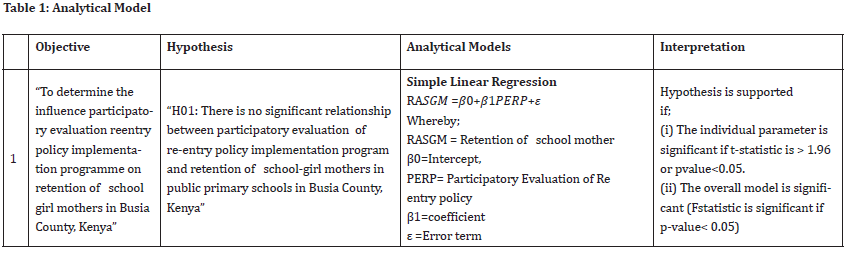
To establish the influence of participatory evaluation of the re-entry policy on the retention of school-girl mothers in public primary schools in Busia County, Kenya.
1.4 Research Significance
This study is expected to generate evidence to strengthen the re-entry and re-integration of readmitted schoolgirl mothers, ensuring their retention in public primary schools. The findings may specifically benefit the target population by providing insights that promote the completion of primary education for schoolgirl mothers. Practical contributions include raising
awareness among key stakeholders such as school administrators, caregivers, and members of multi-sectoral task forces about the challenges and solutions for re-entry policy implementation.
This awareness is expected to empower stakeholders to actively support and facilitate the retention and academic progression of these learners. Additionally, the study is hoped to provide actionable recommendations for project monitoring and evaluation practitioners, enriching the practical tools and approaches for assessing educational program aimed at vulnerable populations.
On a theoretical level, the study may contribute to the growing body of knowledge in project monitoring and evaluation, with a focus on participatory evaluation approaches in education. By exploring the participatory evaluation of re-entry policy it is expected to pave the way for further research into effective strategies for integrating marginalized groups into formal education.
From a policy perspective, the study may provide insights to policymakers and practitioners in education, health, and social services for formulating clear, actionable policies to enhance the effectiveness of re-entry program. These contributions collectively aim to ensure the sustained retention of schoo-girl mothers in school, fostering long-term educational and social outcomes.
Materials and Method
2.0 Literature Review
2.1 Tinto’s Learner Retention Theory
Vincent Tinto introduced the Learner Retention Theory in 1975, with significant refinements presented in his 1987 book Leaving College: Rethinking the Causes and Cures of Student Attrition (Tinto, 2012). The theory posits that student retention is influenced by their cumulative experiences within the formal and informal academic and social systems of their institutions. Tinto emphasized the critical role of academic and social integration, asserting that students who feel a sense of belonging within these communities are more likely to persist and succeed in their education (Fells, 2024).
The theory is based on three core assumptions. First, integration within academic and social environments is essential, as students who establish strong connections within these systems are more likely to stay enrolled (Fells, 2024). Second, institutions hold a significant responsibility for fostering environments that promote a sense of belonging, as effective practices enhance integration. Third, the theory highlights the role of student agency, arguing that persistence decisions are shaped by individual students’ perceptions of and experiences within the institution (Tinto, 2012). These assumptions illustrate the interplay between institutional efforts and individual characteristics in influencing retention.
Tinto’s theory has undergone refinements over the years, with contributions from various scholars. Atif, Richards, and Bilgin (2013) emphasized the role of external factors, such as financial pressures, family responsibilities, and work commitments, in shaping retention decisions, noting that positive academic and social experiences alone may not suffice if external challenges are overwhelming.
Similarly, Coleman, Beasy, Morrison, and Mainsbridge (2024) highlighted the importance of considering non-traditional student populations, such as those from diverse cultural backgrounds or with significant personal obligations. Tinto himself, in his 2019 updates, reaffirmed the importance of institutional practices in fostering integration while acknowledging the impact of external factors on student persistence.
In this study, Tinto’s Learner Retention Theory is the anchor theory because it explains the relationship between participatory evaluation of re-entry policy and retention of school-girl mothers, as well as mediating effect of academic integration in the relationship between reentry policy evaluation and retention. The theory provides the framework for implementing a re-entry policy program to enhance learner retention in public primary schools.
Key variables outlined by the theory include pre-entry attributes, such as family background, learner agency, and prior schooling experiences, which shape responses to institutional environments. Institutional experiences, including re-entry policy and school practices that influence academic focus, social integration, and learner satisfaction. Additionally, goal commitments drive interactions with academic staff and peers, fostering academic success and retention. The theory’s emphasis on institutional responsibility controlling processes of participatory evaluation of re-entry policy in creating supportive environments that promote integration of school-girl mothers in primary schools.
McCubbin (2003) in his criticism of the theory argued that Tinto’s theory lacked applicability to non-traditional student populations, such as older students or those balancing education with work and family, suggesting that academic integration may not always predict retention for these groups. Liu (2002) critiqued the theory’s reliance on path analysis, which he argued limits the ability to validate causal relationships.
2.2 Empirical Literature Review
Studies examining the implementation of re-entry policies have produced varied and sometimes conflicting findings, revealing a need for a more comprehensive approach. For instance, Christine (2020) in her study in Machakos County, Kenya, found a critical gap in the implementation of the re-entry policy, noting that stakeholders consistently underperformed in
6 their roles. Her findings highlighted issues such as unclear policy guidelines and a lack of capacity among counselors, which hindered the effective retention of school-girl mothers.
Similarly, Chiyota (2020) in Zambia and Muyunda (2021) in Lusaka, Zambia, both concluded that re-entry policies were not consistently implemented due to a lack of clear guidelines, ambiguous provisions, and a lack of stakeholder ownership. While Chiyota’s study did note some.
achievements in re-admission, the overall findings from these researchers underscore a significant problem with policy implementation. These findings collectively reveal a conceptual gap: a limited understanding of how participatory evaluation can enhance policy clarity, consistency, and stakeholder ownership.
The existing body of work also presents clear contextual and methodological limitations that this study seeks to address. Both Christine (2020) and Muyunda (2021) focused exclusively on secondary schools, and their studies were confined to specific geographical areas—Machakos County, Kenya, and Lusaka District, Zambia, respectively.
This leaves a notable contextual gap concerning re-entry policies and retention in primary schools, especially in high-burden regions like Busia County. Methodologically, Chiyota (2020) and Muyunda (2021) employed qualitative case study approaches, which, while valuable, may lack the empirical breadth needed to fully capture the dynamics of policy implementation. The current study aims to bridge this methodological gap by incorporating a mixed-methods approach that combines both qualitative insights and quantitative data to provide a more robust and comprehensive analysis of the role of participatory evaluation on the retention of school-girl mothers.
Results
3.0 Research Methodology
This study’s methodology is grounded in the pragmatism philosophy. This approach is chosen because it emphasizes a dynamic and evolving “truth” that is shaped by human experience, making it ideal for a topic like re-entry policy where reality is not fixed but is constantly influenced by the lived experiences of school-girl mothers (Rorty, 1986; Elgeddawy & Abouraia, 2024). Pragmatism also aligns with the study’s participatory evaluation framework, as it values experiential knowledge and collaboration, ensuring that the voices of the schoolgirl mothers directly inform the research findings.
The study will employ a descriptive cross-sectional research design, which is well-suited for collecting both quantitative and qualitative data simultaneously. This design is also costeffective and efficient for investigating the relationship between participatory evaluation of reentry policy and the retention of school-girl mothers (Fuyane, 2021). This design has been successfully used in similar studies on re-entry policies in other contexts (Imbosa et al., 2022; Christine, 2020; Muyunda, 2021). The study’s target population consists of key stakeholders in Busia County, a region with a high prevalence of adolescent pregnancies.
The population includes an estimated 328 school-girl mothers, 221 teachers, 328 caregivers, and 8 education officers. This population was selected due to the direct involvement of these individuals in the re-entry process, providing invaluable insights into the policy’s implementation and effectiveness.
A total sample size of 270 will be selected from the target population using the Krejcie and Morgan (1970) model. A multistage cluster sampling procedure will be applied to select participants. At the first stage, purposive sampling will be used to select sub-county education officers. At the second stage, public primary schools will be selected using simple random sampling. Finally, within the selected schools, a combination of simple random sampling will be used for school-girl mothers and teachers, while purposive sampling will be used for caregivers to participate in focus group discussions.
Data will be collected using four instruments: self-administered questionnaires for school-girl mothers and teachers, a focus group discussion (FGD) guide for caregivers, and a key informant interview (KII) guide for education officers. These tools will be pilot-tested on 20% of the sample to refine questions and ensure clarity. Validity and reliability will be assessed using correlation analysis for validity and Cronbach’s alpha (α) coefficient for reliability, with a threshold of 0.7 considered acceptable.
Data will be analysed using both quantitative and qualitative methods. Quantitative data will be analysed using SPSS, involving a simple linear regression model to test the main hypothesis: Y=β0+β1X1+?. This will determine the influence of participatory evaluation (X1) on the retention of school-girl mothers (Y). Diagnostic tests for normality, linearity, multicollinearity, and heteroscedasticity will be conducted to ensure the validity of the regression model. Qualitative data from FGDs and KIIs will be transcribed and analysed thematically to complement the quantitative findings.
Ethical considerations will be strictly followed, including obtaining permits from NACOSTI and the University of Nairobi, securing informed consent from all participants, and ensuring the confidentiality and anonymity of all data collected.
4 Findings and Discussions
This section presents the study’s findings, beginning with a demographic analysis of the participants, followed by a detailed look at descriptive and inferential statistics. Each subsection presents the results first, then discusses their significance, implications, and connection to the study’s theoretical framework and existing literature.
4.1 Demographic Analysis
This subsection outlines the demographic characteristics of the school-girl mothers who participated in the study
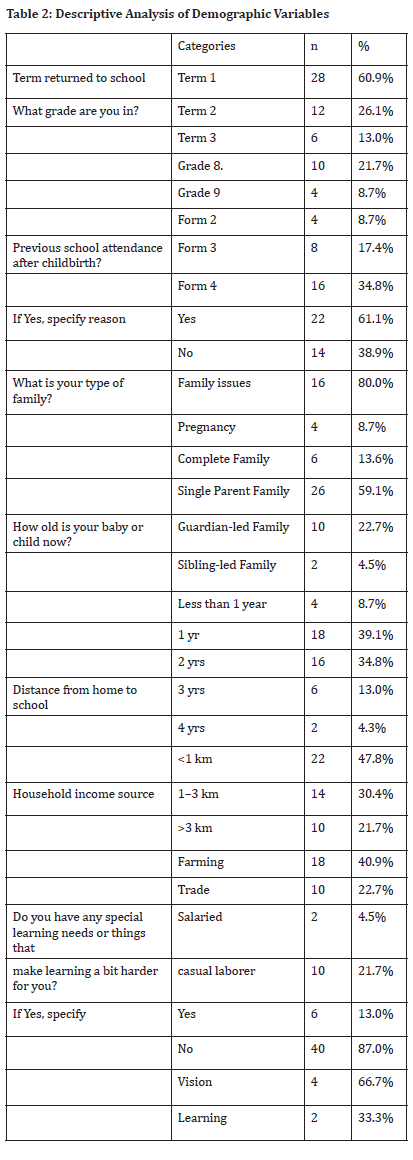
The demographic analysis provides a clear picture of the study participants. A majority of the school-girl mothers returned to school in Term 1 (60.9%), with a significant number coming from single-parent families (59.1%). Most students live less than 1 km from school (47.8%), and the primary household income source is farming (40.9%). A crucial finding is that of those who had previously dropped out, 80% cited family issues, not the pregnancy itself, as the reason.
The prompt return to school suggests that the re-entry policy is effective in encouraging students back into the education system. The high percentage of students from single-parent families highlights a socioeconomic vulnerability that underscores the importance of a strong support system beyond the school. The finding that family issues, rather than pregnancy, are the main reason for dropping out is particularly significant. It implies that for a re-entry policy to be effective, it must be holistic and address complex family dynamics and support structures, not just the pregnancy itself. The short distance to school for nearly half the students is also a favorable factor that likely contributes to higher retention, as it reduces logistical and financial burdens associated with transportation.
4.2 Descriptive Statistics
The descriptive statistics section presents the findings for two key areas: the perceptions of school-girl mothers regarding the participatory evaluation of the re-entry policy and their feelings of retention and integration in school.
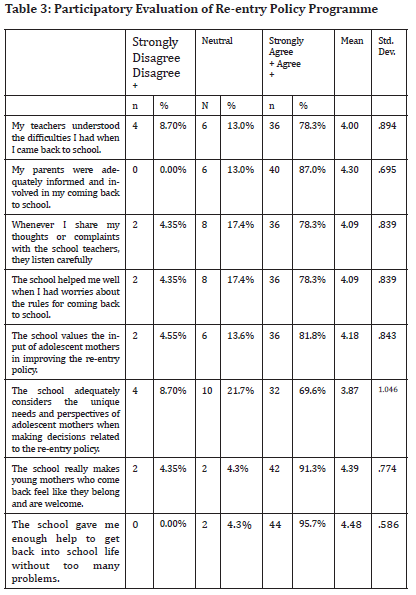
The findings from the descriptive statistics reveal a highly positive perception of the participatory evaluation of the re-entry policy among the school-girl mothers. All indicators of participatory evaluation showed high mean scores on a 5-point Likert scale, ranging from 3.87 to 4.48. Specifically, a large majority of participants felt their parents were adequately involved (87.0%, mean=4.30), that the school valued their input (81.8%, mean=4.18), and that teachers understood their difficulties (78.3%, mean=4.00). The most striking results were the overwhelming agreement that the school provided sufficient help to ease their return (95.7%, mean=4.48) and successfully fostered a sense of belonging and welcome (91.3%, mean=4.39).
These results collectively indicate that the collaborative approach to policy implementation is highly effective from the perspective of the students themselves.
The consistently high mean scores indicate that the participatory evaluation approach is being implemented effectively in Busia County’s primary schools. These findings suggest that the re- entry policy is not merely a directive but a collaborative process involving teachers, parents, and students. The high percentage of respondents who felt that their input was valued and that they received sufficient help highlights the significance of a stakeholder-driven approach. This finding is a key insight into what makes a re-entry policy successful, moving beyond the simple existence of a policy to its active and collaborative implementation.
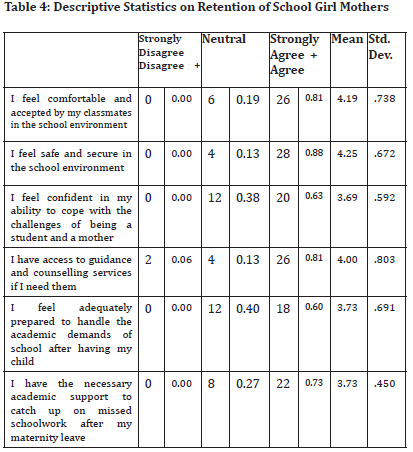
The findings from the descriptive statistics also indicate a strong sense of retention and successful integration among the school-girl mothers. A large majority of students felt comfortable and accepted by their classmates (81%, mean=4.19), highlighting positive social integration. Furthermore, 88% of respondents felt safe and secure within the school environment (mean=4.25), while 81% reported having access to guidance and counselling services (mean=4.00). In terms of academics, 73% felt they had the necessary academic support to catch up on missed work (mean=3.73), and 63% felt confident in their ability to manage their dual roles as students and mothers (mean=3.69). These results demonstrate that the school environment is providing the necessary social, emotional, and academic support to help these students not only re-enter but also thrive in their education.
The high scores for comfort, acceptance, and safety show that the students feel successfully integrated into the school’s social environment. This is a critical component of Tinto’s Learner Retention Theory, which emphasizes that a sense of belonging is essential for student persistence. The findings on academic support and confidence are also positive, suggesting that the schools are providing the necessary resources to address the dual challenges faced by these students. The results demonstrate the tangible benefits of the re-entry policy and the participatory approach. The high rates of perceived support directly correlate with the strong feelings of acceptance and security, creating a virtuous cycle where effective implementation leads to successful retention.
4.3 Inferential Analysis
This subsection presents the statistical results from the regression analysis, which was used to test the study’s hypothesis and determine the influence of participatory evaluation on student retention.
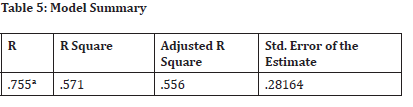
The model summary shows a strong positive correlation between participatory evaluation and retention, with an R-squared value of 0.571. The R-squared value indicates that 57.1% of the variance in the retention of school-girl mothers can be explained by the participatory evaluation of the re-entry policy program. The adjusted R-squared is 0.556, which accounts for the number of predictors in the model, confirming the strength of the relationship.
This finding is highly significant because it demonstrates that the participatory approach is a major factor in the re-entry program’s success. The high R-squared value suggests that the study’s independent variable—participatory evaluation—is a very powerful predictor of the dependent variable, retention. This is a critical insight, as it moves beyond simply stating that a re-entry policy is in place and shows that the method of its implementation is what truly drives positive outcomes.
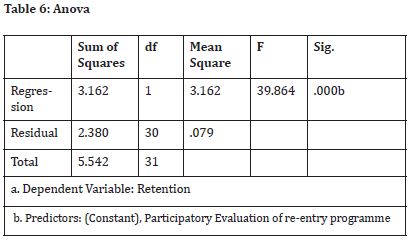
The ANOVA table shows that the regression model is statistically significant (F=39.864, p<0.001). The p-value of 0.000 is well below the significance level of 0.05. The statistical significance of the model confirms that the relationship between participatory evaluation and retention is not due to random chance. This provides confidence that the findings are reliable and that the independent variable truly has an effect on the dependent variable. It validates the overall research design and the relationship between the variables, paving the way for a deeper analysis of the specific coefficients.
The coefficients table provides the direct evidence of the relationship. The unstandardized coefficient (β) for participatory evaluation is 0.701, and the standardized beta (β) is 0.755. This shows that for every one-unit increase in the participatory evaluation of the re-entry program, the retention of school-girl mothers increases by 0.701 units. The finding is highly significant, with a t-statistic of 6.314 and a p-value of 0.000 (less than 0.05).
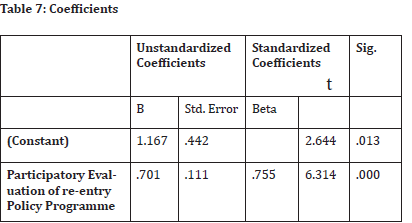
The positive and significant beta coefficient confirms the study’s main hypothesis: participatory evaluation has a significant positive influence on the retention of school-girl mothers. This result aligns with the conceptual framework, which suggests that stakeholder collaboration and a sense of ownership lead to better policy outcomes. The usefulness of this finding is that it provides a clear, actionable insight for policymakers and education stakeholders. It highlights that the most effective way to improve re-entry policy outcomes is to adopt a collaborative, inclusive approach that actively involves the beneficiaries.
Discussion
4.4 Discussions
The findings of this study provide crucial empirical evidence that aligns with and, in some cases, contrasts with existing literature on re-entry policies for school-girl mothers. By focusing on a participatory evaluation approach, this research offers a valuable contribution to the discourse on policy implementation and student retention.
The analysis of the demographic variables from Busia County show that a majority of school- girl mothers are from single-parent families and that family issues are the primary reason for dropping out, highlight a significant socioeconomic vulnerability. This finding aligns with the literature’s emphasis on systemic barriers like poverty and inadequate support systems (Baafi, 2020), which often prevent girls from fully reintegrating into school.
The study’s finding that family issues, rather than the pregnancy itself, are the main reason for dropping out is a particularly nuanced insight that challenges the traditional focus on the medical and social stigma of pregnancy alone. It underscores the need for re-entry policies to be holistic, addressing the complex family dynamics that may compromise a student’s ability to remain in school, a factor not always explicitly highlighted in the literature.
Additionally, the descriptive statistics on participatory evaluation present a clear contrast to previous studies that found re-entry policies to be ineffective due to implementation challenges. For instance, Muyunda (2021) found that the lack of clear goals and limited stakeholder awareness made a re-entry policy ineffective in Lusaka, Zambia. However, this study’s findings directly counter that by showing a very positive perception of the re-entry process, with high mean scores for parental involvement, teacher understanding, and student input.
This suggests that the participatory evaluation approach used in Busia County is a crucial factor in overcoming the very barriers identified by Muyunda. By involving stakeholders, particularly the school-girl mothers themselves, the policy moves from a theoretical directive to a practical, collaborative tool for change, validating the argument of Cornish et al. (2023) that a collaborative approach is essential for success. The results show that stakeholder involvement creates a sense of ownership and shared responsibility, which is key to ensuring that the policy’s goals are met.
Further, the high scores for social and emotional integration, with students feeling comfortable, accepted, and safe, provide strong empirical support for Tinto’s Learner Retention Theory. Tinto (1975, 1993) posits that social integration is a critical factor in student retention. This study’s findings confirm this theoretical link, demonstrating that the participatory evaluation process effectively facilitates this crucial integration.
Unlike studies that found low retention rates despite the existence of re-entry policies (Muli et al., 2023), this research shows a direct correlation between a well-implemented, participatory approach and successful integration, which in turn leads to higher retention. This finding reinforces the idea that policy success is not just about a law’s existence but about how it is operationalized to create a supportive and inclusive environment.
The inferential analysis provides robust empirical evidence to support the study’s central hypothesis. The R-squared value of 0.571 indicates that 57.1% of the variance in retention can be explained by the participatory evaluation of the re-entry program. This is a powerful finding that addresses a key research gap identified in the literature, where previous studies often provided conflicting results or failed to show a direct causal link between policy and outcome. The high R-squared value confirms that the method of implementation, a participatory approach, is a major factor in the program’s success, moving beyond simply stating that a re- entry policy is in place.
The statistical significance of the model (F=39.864, p<0.001) further validates the findings, providing confidence that the relationship is not due to random chance. This result, along with the positive and significant beta coefficient (β=0.755), confirms the study’s main hypothesis: participatory evaluation has a significant positive influence on the retention of school-girl mothers.
This finding highlights that the most effective way to improve re-entry policy outcomes is to adopt a collaborative, inclusive approach that actively involves the beneficiaries. This directly supports the arguments of researchers like Cornish et al. (2023) and Chiyota (2020), who have theorized about the importance of stakeholder collaboration but lacked strong empirical evidence. The results demonstrate the tangible benefits of aligning policy with a pragmatic, on- the-ground implementation strategy.
Conclusions
For policymakers and educational stakeholders, the study recommend that re-entry policies be revised to formally mandate a participatory evaluation framework. The study found that this approach, which actively involves school-girl mothers, parents, and teachers, is a significant driver of successful retention.
The Ministry of Education, in collaboration with the National Council for Children’s Services and other relevant government agencies, should develop and disseminate clear guidelines on how to implement this framework. This includes establishing inclusive feedback channels, encouraging collaborative decision-making, and providing resources for training teachers and administrators on how to engage effectively with all stakeholders. Given the high percentage of school-girl mothers from single-parent households, a special focus should be placed on engaging caregivers and providing them with targeted support to reduce the likelihood of dropout due to family issues, as highlighted in the findings.
As a result, this will ensure that the policy’s implementation is not only top-down but also inclusive and responsive to the unique socio-cultural and economic contexts on the ground, ultimately leading to improved retention rates and better educational outcomes for school-girl mothers.
For non-governmental organizations and community-based organizations, the study recommend that efforts be focused on creating robust academic and social support systems. The findings indicate that while re-entry is happening, the continued success of these students is dependent on feeling accepted and having the tools to manage academic and personal challenges. Organizations should establish mentorship programs that pair returning mothers with older students or community members who can provide guidance and encouragement.
Additionally, these organizations should work with schools to develop structured academic catch-up programs and workshops on coping with the dual responsibilities of motherhood and student life. These initiatives would strengthen the support systems that the study’s participants have identified as critical, thereby creating a virtuous cycle of positive academic and social integration that leads to long-term retention.
References
[1] Addey, C., & Sellar, S. (2020). Collaborative evaluation in education: A critical review. Routledge.
[2] Adomako Barfi Haruna, P., Ofori-Amoah, J., & Adu, R. (2022). Learner retention in public senior high schools: A case study of selected schools in the Kumasi Metropolis. Ghanaian Journal of Education Research, 9(1), 1–18.
[3] Alsharari, N. M., & Alshurideh, M. T. (2020). Student retention: A systematic review of literature. International Journal of Higher Education, 9(5), 158–172.
[4] Atif, A., Richards, D., & Bilgin, A. (2013). The role of external factors in student retention. Journal of Higher Education Policy and Management, 35(2), 177–188.
[5] Baafi, P. (2020). Socio-cultural factors affecting the education of adolescent mothers: A case study of the Bosomtwe District in Ghana. Journal of Education and Practice, 11(13), 1–9.
[6] Bijayini, J. (2023). Adolescent pregnancy as a global developmental challenge. International Journal of Social Sciences and Management Review, 6(1), 1–10.
[7] Chiyota, F. (2020). Re-entry policies for school-girl mothers: A qualitative case study of their implementation in Lusaka, Zambia. (Unpublished master’s thesis). University of Zambia, Lusaka, Zambia.
[8] Christine, J. N. (2020). Influence of re-entry policy on retention of school-girl mothers in public primary schools in Machakos County, Kenya. (Unpublished master’s thesis). Kenyatta University, Nairobi, Kenya.
[9] Coleman, B., Beasy, S., Morrison, B., & Mainsbridge, C. (2024). Supporting non- traditional students: A contemporary perspective on Tinto’s theory of student retention. Higher Education Research & Development, 43(1), 22–35.
[10] Cornish, M. A., Lumsden, S., O’Brien, M., & O’Brien, A. (2023). A participatory evaluation approach to educational programs. The American Journal of Evaluation, 44(2), 209–224.
[11] Dalangin, V. (2018). Factors affecting student retention and persistence in higher education. (Unpublished doctoral dissertation). University of San Jose, Costa Rica.
[12] Edstrom, J., Gardelli, F., & Backman, P. (2024). Policy implementation gaps in educational retention: The case of adolescent mothers in Busia, Kenya. International Journal of Educational Development, 106, 102927.
[13] Fells, C. A. (2024). Rethinking Tinto’s theory of student retention in the 21st century. (Unpublished master’s thesis). University of Massachusetts, Boston, MA.
[14] Imbosa, S., Majanga, F., & Ouda, J. (2022). Effectiveness of re-entry policy on retention of school-girl mothers in public secondary schools in Vihiga, Kenya. Journal of Education and Practice, 13(21), 1–10.
[15] Kenya, L. O. (2013). The constitution of Kenya: 2010 (pp. 22-29). Chief Registrar of the Judiciary. 16Kenya, L.O. (2013). THE BASIC EDUCATION ACT, 2013.
[17] Kenya Demographic and Health Survey (KDHS). (2022). Kenya Demographic and Health Survey 2022. Kenya National Bureau of Statistics (KNBS), Ministry of Health, & ICF.
[18] Kola, J. M., Kimani, E. N., & Otiende, J. (2020). Challenges and coping strategies of adolescent mothers in refugee camps in Kenya: A case study of Kakuma Refugee Camp. Journal of Refugee Studies, 33(3), 572–591.
[19] Liu, Y. (2002). A critique of Tinto’s model of student departure. The Journal of Higher Education, 73(6), 633–646.
[20] Marende, E. (2022). Participatory monitoring and evaluation for educational programs in Kenya. Jomo Kenyatta University of Agriculture and Technology, Juja, Kenya.
[21] McCubbin, H. I. (2003). The theory of learner retention: A critique and new directions. Journal of College Student Development, 44(4), 501–516.
[22] Mukabana, C., Odunga, S., & Mutweleli, S. (2024). Academic integration and retention of school-girl mothers in urban informal settlements: The case of Nairobi, Kenya. Journal of Educational and Social Policy, 11(1), 1–15.
[23] Muli, D., Kamau, S., & Waweru, A. (2023). Re-entry policies and academic performance of school-girl mothers in selected secondary schools in Kitui County, Kenya. Journal of Research in Education and Social Sciences, 6(1), 1–10.
[24] Musyoka, P., Ndirangu, M., & Nyabuto, J. (2024). The moderating role of caregiver support on academic outcomes for adolescent mothers in Kenya. International Journal of Education and Research, 12(4), 1–12.
[25] Muyunda, A. (2021). Implementation of re-entry policy for school-girl mothers in Lusaka District, Zambia: A qualitative case study. (Unpublished master’s thesis). University of Zambia, Lusaka, Zambia.
[26] Tinto, V. (1975). Dropout from higher education: A theoretical synthesis of recent research. Review of Educational Research, 45(1), 89–125.
[27] Tinto, V. (1993). Leaving college: Rethinking the causes and cures of student attrition (2nd ed.). The University of Chicago Press.
[28] Tinto, V. (2012). Completing college: Rethinking student attrition. The University of Chicago Press.
[29] Tinto, V. (2019). The promise of a new paradigm. In S. T. Laanan, L. L. H. Jones, & E. M. H. Veyna (Eds.), The evolving nature of higher education: Student persistence and retention (pp. 3–14). Routledge.
[30] Vanderburg, A., Jones, P., & Wilson, S. (2023). The role of academic integration in promoting student retention. Journal of Educational Psychology, 115(5), 897–911.
[31] World Health Organization (WHO). (2022). Guidance on school health and school- based health services. World Health Organization.
IJBMR -ISSN: 0976:6685. ©Copyright 2026 This is an open access article under the CC BY-NC-ND license (http://creativecommons.org/licenses/by-nc-nd/4.0/).
Published by BioMedSciDirect Publications
© Copyright 2026 BioMedSciDirect Publications.
This work is licensed under a Creative Commons Attribution-NonCommercial-NoDerivatives 4.0 International License (CC BY-NC-ND)

This work is licensed under a Creative Commons Attribution-NonCommercial-NoDerivatives 4.0 International License (CC BY-NC-ND)